All Roads Lead to Roma
www.stuardtclarkesrome.com

Stuardt's Photo Gallery


Finally, I have been able to get enough time to put some photos I have taken from the visits I have made to Rome to share with you all.  If you find any of them do not come up, please notify me so that I can see if I uploaded them onto the website correctly.  Also, other photos can be found throughout this website, mainly under my Churches and Basilicas page, The Vatican and Environs, as well as Dining, Shopping and Lodging.  Double-click on the photo you wish to view.  Once viewed, hit "Back" on your browser to return to this page.  Enjoy!

Around the Vatican

John Paul II arriving at a Wednesday Papal Audience in St. Peter's Square.

One of two fountains in St. Peter's Square (one is by Maderno, the other by Bernini).  They are on either side of the Egyptian obelisk in the center of the square that was taken from from Nero's Circus.

Vaulted frescoed ceiling of a gallery hallway at the Vatican Museums.

Looking up at Michelangelo's Dome inside the Vatican from Bernini's Canopy.

A typical gold ceiling in one of the side apse's of the Vatican.

Ponte Vittorio Emanuele with the Dome of St. Peter's in the background (on the right).

Castel Sant'Angelo

Castel Sant'Angelo (originally built as Hadrian's Mausoleum).
Ponte Sant'Angelo.  Street vendors line this bridge daily with their wares.
Ponte Sant'Angelo view taken from the rooftop of Castel Sant'Angelo.
Courtyard inside Castel Sant'Angelo.
Fresco detail from an outside corridor, Castel Sant'Angelo.  It is amazing it is still visible since it is open to the elements.

Piazza di Spagna Area

Trinita dei Monti atop the Spanish Steps.
Piazza di Spagna and via Condotti from atop the Spanish Steps.
Villa Medici from atop the Spanish Steps.
Bernini's Triton Fountain, Piazza Barberini.
Capuchin Crypts underneath Santa Maria della Concezione, via Veneto at Piazza Barberini.

Campo de'Fiori Area

Flower stalls at the outdoor produce market in Campo de'Fiori.
Teatro Argentina Ruins, along Corso Vittorio Emanuele II near Campo de'Fiori.

Quirinale Area

Palazzo del Quirinale, the old papal palace that is now the home of the President of Italy.  Tours are every second and fourth Sundays, 8:30 a.m.-12:30 p.m., and are free.  They are worth it if you have the spare time.

Status of Castor and Pollux, Piazza del Quirinale, in front of the Presidential Palace.

Piazza della Rotonda Area

Santa Maria sopra Minerva with Bernini's marble elephant/obelisk statue in front (near the Pantheon).

Close-up of Bernini's marble elephant carrying an ancient Egyptian obelisk, in front Santa Maria sopra Minerva, Piazza di Santa Maria sopra Minerva.

Raphael's Tomb inside The Pantheon.

San Pietro in Vincoli Basilica

Ancient staircase off via Cavour leading to S. Pietro in Vincoli Basilica.
San Pietro in Vincoli Basilica exterior.
The chains that bound St. Peter, on the altar, in San Pietro in Vincoli (St. Peter in Chains) Basilica.
Michelangelo's "Moses", San Pietro in Vincoli Basilica.

Piazza Navona

Piazza Navona with Sant'Agnese in Agone (St. Agnes in Agony) to the left.

Roman Forum Area

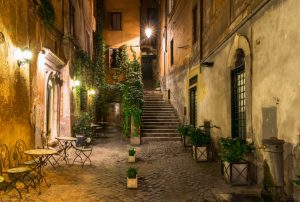
A great outdoor ivy-canopied deli/restaurant at the corner of via Cavour and via dei Fori Imperiale across from the Roman Forum ruins.  A great place to sit and have lunch and an ice-cold beer in the summertime.

Mamertine Prison were ss. Peter and Paul were imprisoned, inside the Roman Forum.  Visits can be made to the underground cells for a donation.

Temple of Antoninus and Faustina, Roman Forum.  One of the few remaining intact building of ancient Rome.

Forum panorama from The Capitol with Santa Francesca Romana church in the background.  You can barely see a portion of the Coliseum way back as well.

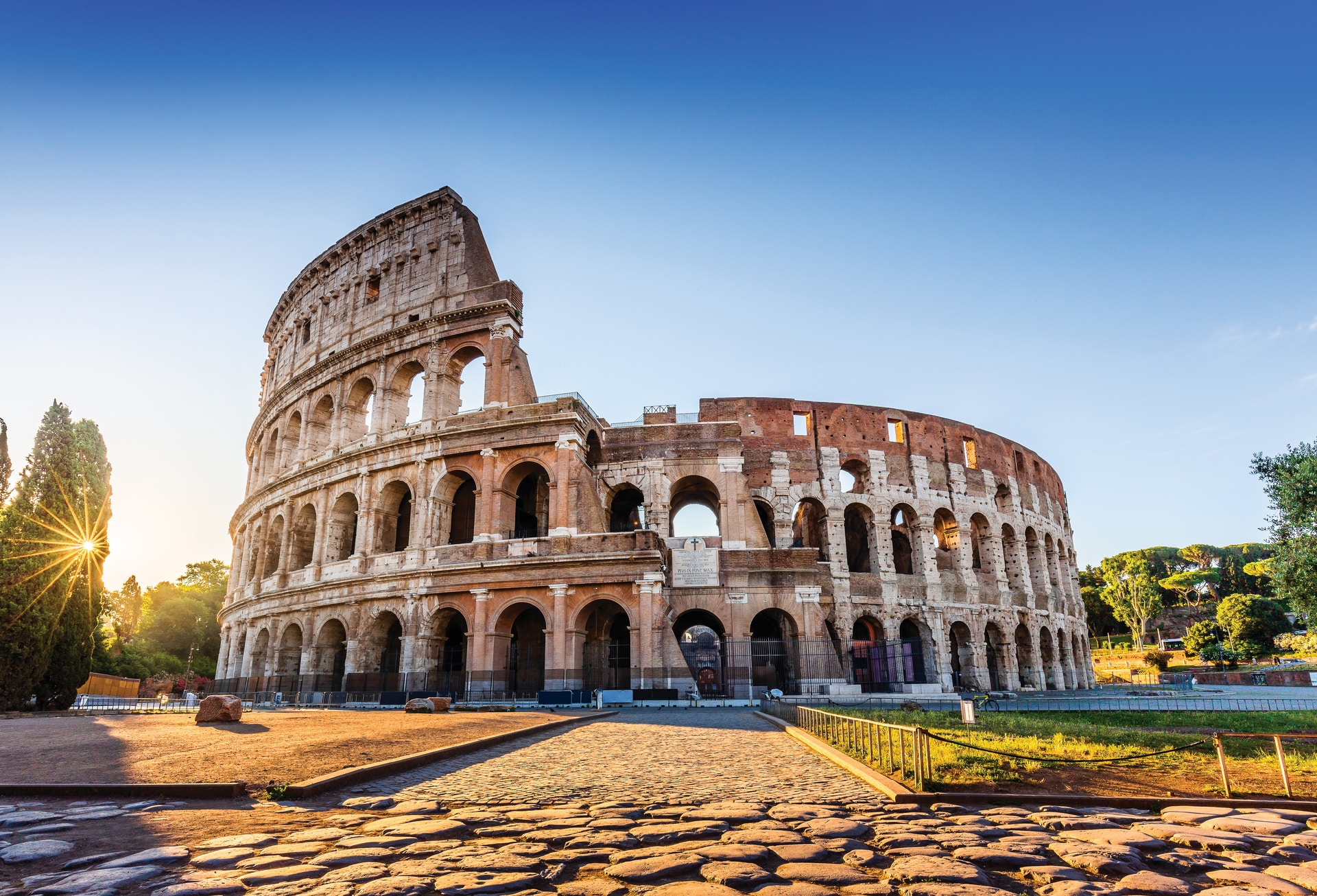
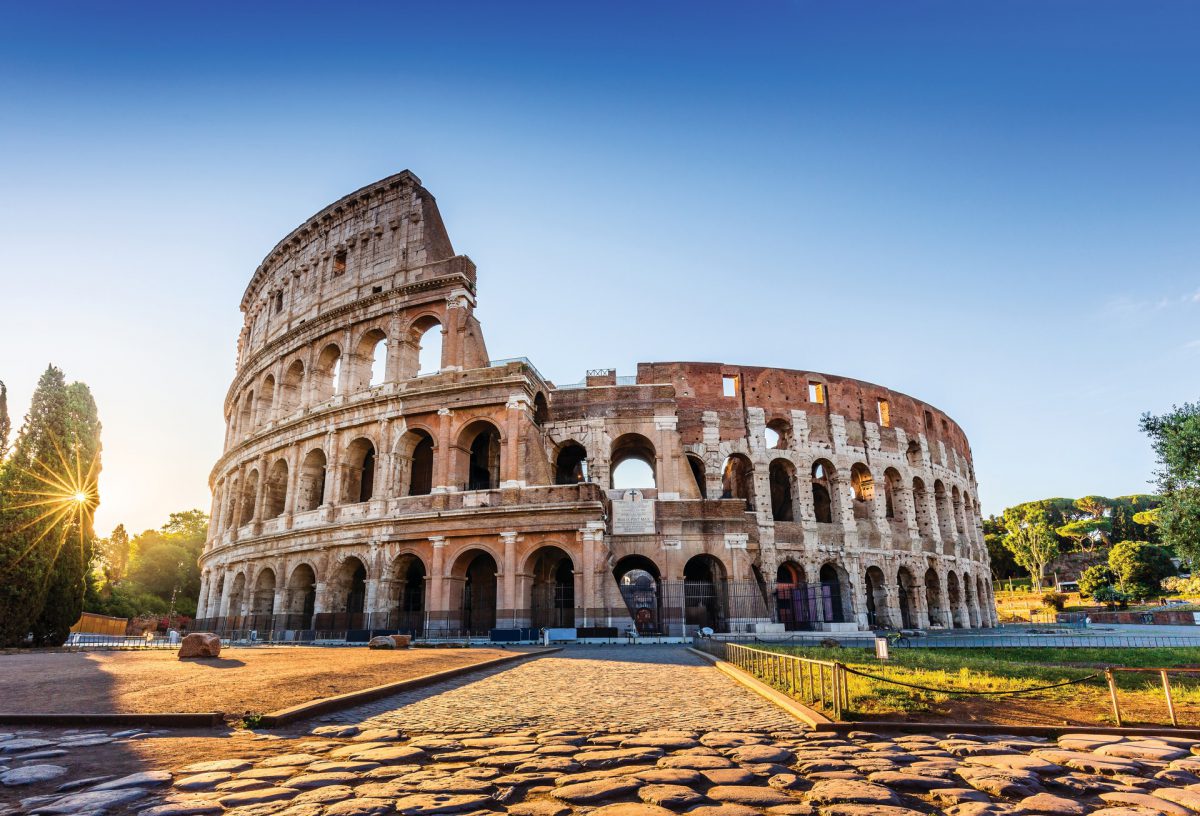
The Coliseum.

Section of subterranean floor of the Coliseum.

The Arch of Constantine near the Coliseum.

Circus Maximus as seen from Palatine Hill.

Apollo's house, Palatine Hill, Roman Forum.

The Capitol Area

The Cordonata, Michelangelo's great staircase flanked on top by the Dioscuri, Castor and Pollux, with the Palazzo Senatorio in the background, Piazza del Campidoglio.

The ancient ruins of Teatro Marcello, down a little further from The Cordonata on the righthand side of the boulevard.

Vittorio Emanuele II Monument, Piazza Venezia.  Known by the Romans as the Wedding Cake and the typewriter.  Most do not like it because it is gigantic and gawdy.  However, I think it is breathtaking.  From the top of the dome of St. Peter's (if you care to try and climb all the stairs), it sticks out in the distance.

San Marcello on via del Corso near Piazza Venezia.

Miscellenous Pictures Along the Tiber

Ara Pacis (Altar of Peace) and Mausoleum of Augustus.  Note part of the original Tomb of Augustus in the right foreground.

Ancient Tomb of Augustus.  It is not open to the public but art and history students do get private tours of the inside grounds from time to time.

Palazzo di Giustizia (Hall of Justice) from via Zandarelli.  Note the massive iron horses pulling a chariot carrying an angel atop the building.

Sacro Cuore del Suffragio with the Hall of Justice in the background.  It is the only church in Rome of gothic architecture.

Santi Ambrogio e Carlo al Corso Basilica (near Ara Pacis).

Piazza di Trevi

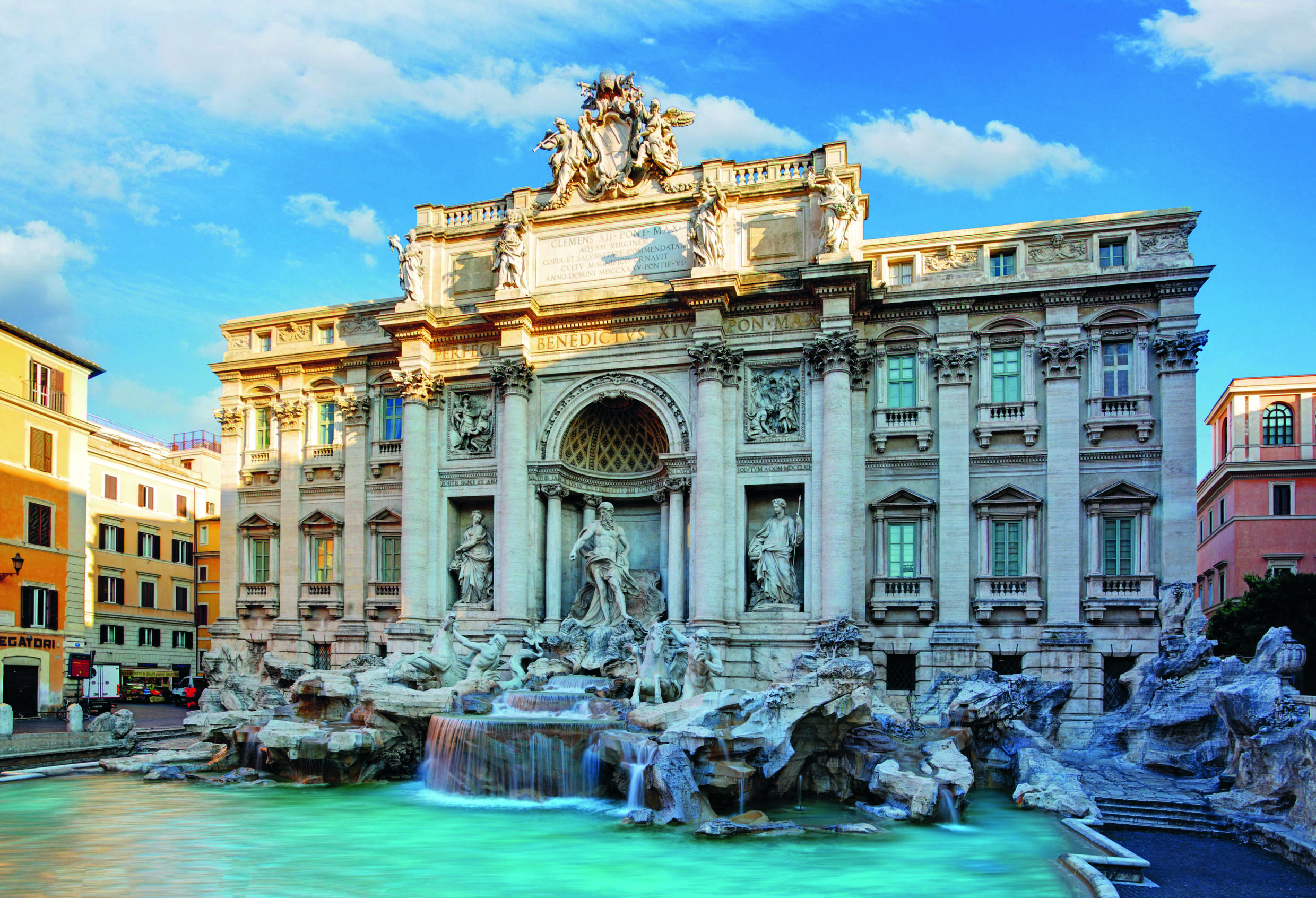
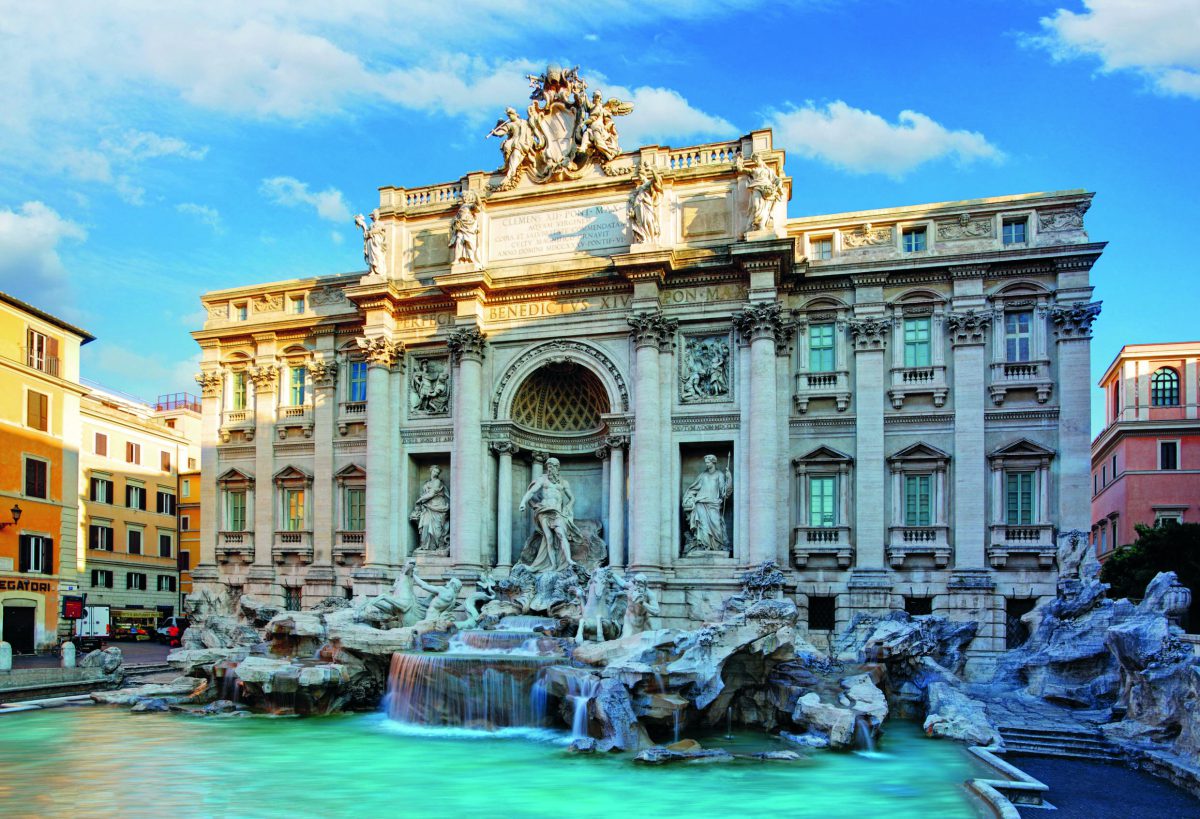
Trevi Fountain.  The famed fountain where if you toss a coin in the fountain you are sure to return to Rome.

ss. Vincenzo e Anastasio Church, Piazza di Trevi (beautiful church facing Trevi Fountain).

Piazza del Popolo

The twin churches, Santa Maria Montesanto (left) and Santa Maria dei Miracoli (right), Piazza del Popolo.

Porta del Popolo, the 16th century gate built to connect Rome to the Adriatic coast by way of the Via Flaminia (built in 220 B.C.)

The 3,000-year-old obelisk that now adorns the center of Piazza del Popolo was originally brought to Rome by Augustus to adorn the Circus Maximus.

The twin Medici Gates along the Via del Murio Torto which takes you into Pincio Gardens.

Piazza del Popolo looking up towards a portion of Villa Medici.

Piazzale di Ostiense/Parco Egerio Area

The Pryamid Tomb of Caio Cestio, Porta di San Paolo.  The Protestant cemetery is behind the wall.
Porta di San Paolo

In the Parco Egerio area, the ancient ruins of the Baths of Caracalla.

More will follow as time allows.


Back to Mainpage