All Roads Lead To Roma
www.stuardtclarkesrome.com

ROME CHRONOLOGICAL TIMELINE - 753 B.C. - PRESENT


B.C.

753        Founding of Rome by Romulus, whose was first of seven kings (until 715 B.C.).
750        Tarpeia betrays city to the Sabines.
715        (circa) Numa Pompilius becomes king until 678 B.C.; establishes 12-month calendar.
700        The approximate beginning of the Etruscan period.

673        (circa) Tullus Hostilius becomes king until 641 B.C.
659        The Romans destroy the rival city of Alba Longa.
641        (circa) Ancus Marcius becomes king until 616 B.C.
616        (circa) Tarquinius Priscus becomes king until 579 B.C.
600        Probable date of the construction of the Cloaca Maxima sewer.

590        (circa)  Temple of Jupiter erected in the Roman Forum.
579        (circa)  Servius Tullius becomes king until 534 B.C. (some say 578).
575        Probable date that Rome is unified into a city.
565        The traditional date the Servian Wall around Rome's seven hills is started.
534        King Servius is murdered.  Tarquinius Superbus becomes king until 509 B.C.
510        Approximate date of the first treaty between Carthage and Rome.  Tarquin is exiled.
              Temple of Jupiter is consecrated on the Capitoline.
509        Lucius Junius Brutus expels the Etruscans from Rome and founds the Republic.
              He and Horatio Pulvillus rule until 450 B.C.
507        War against the Etruscans.  Horatius defends the wooden bridge across the Tiber.

499        Battle against the Latin tribes; Temple of Castor and Pollux begun to commemorate
              victory.
497        Temple of Saturn built in Roman Forum at the end of Via Sacra.
494        The First Secession of the Plebeians.
493        First treaty agreed on between the Latins and Rome.
484        Temple of Castor and Pollux is dedicated in the Roman Forum.
474        Syracuse defeats the Etruscans.
456        Lucius Quintus Cincinnatus rules until 396 B.C.
450        The Twelve Table.

396        Marcus Furlus Camillus rules.  Definitive victory over the rival Etruscan city of Veio.
390        Rome is invaded and conquered by the Celtic Gauls; quacking geese on Capitoline
              Hill warn of the impending attack.
380        Servian Wall is begun to be rebuilt.
367        Licinian Law enacted forbidding large holdings of public land and that one consul
              must be Plebeian.
351        Rome defeats South Etruria.
348        Rome and Carthage sign a treaty of commerce.
343        (to 266 B.C.)  Samnite Wars.
321        Romans are defeated at Claudine Pass.
312        Construction of the Via Appia and Rome's first aqueduct, the Aqua Appia.
              Censorship of Appius Claudius.

268        The first coins of silver is introduced.
264        First gladiatorial games are held in Rome.  (264 B.C.-241 B.C.) First Punic War,
             against Carthage.  Conquest of Corsica, Sicily, and Sardinia.
240        Roman literature introduced.
222        Cisalpine Gauls are defeated.
220        Via Flaminia is built, linking Rome to the Adriatic Coast (to Ariminum).
219        Quintus Fabius Maximus rules.  Senators are forbidden to engage in commerce.
              (219 B.C.-210 B.C.) Second Punic War; Scipio Africanus defeats Carthaginians.
216        Rome is defeated at Cannae.
205        Scipio Africanus rules.  Phrygian worshop of Magna Mater is introduced.
202        Victory at Zama by Scipio Africanus.
200        (to 194 B.C.)  Second Macedonian War.

197        Temple of Juno erected (ruins are embedded in present-day San Nicola in Carcere
              church).
196        Liberty of Greece is announced by Flamininus.
186        The Bacchanalian Conspiracy.
184        Cato the Elder is censored.  Basilica of Cato is erected.  Death of Plantus.
179        Basilica Aemilia built by consuls Marcus Aemilius, Lepidus and Marcus Fulvius
              Nobilor in Forum.
171        (to 168 B.C.) Third Macedonian War.
168        Victory in Macedonian War completes the Roman conquest of Greece.
161        Expulsion of all Greek philosophers and orators.
149        (to 146 B.C.)  Third Punic War; Carthage is destroyed.
148        Macedonia becomes a province.
146        There is a great influx of Greek art.  Africa becomes a province after Carthage is
              destroyed.  Corinth is also destroyed.
140        Monte Testaccio begins to be created by dumping millions of broken terra-cotta
              jars one on top of the other.  Continues until 250 A.D.
133        Tiberius Gracchus rules.  Kingdom of Attalus given to Rome as province of Asia.
123        Introduction of Equites as political power.
122        Gaius Gracchus rules to 120 B.C.
120        Gracchus brothers killed for trying to introduce land reform.
113        (to 101 B.C.) War with Teutons and Cimbri; Army reforms.
112        (to 101 B.C.) War with Jugurtha.
107        (to 87 B.C.) Marius is consul seven times.
100        Birth of Julius Caesar.

96        Cyrene is given to Rome.
91        Social War (war against Italian allies)
88        Senate is restored.  Sulla conquers Rome.  Massacre of Romans in war with
            Mithridates of Pontus.
87        Marius and Cinna Revolution.  Many nobles are killed and Sulla deposed.
86        Death of Marius.
82        Sulla is consul until 80 B.C.  Defeat of Samnites at the Colline Gate of Rome.
81        Cicero's first speech.  Cisalpine Gaul becomes a province.
79        Sulla resigns.
78        Death of Sulla.
74        Bithynia is given to Rome.
73        Third Servile War, which lasts until 71 B.C.
71        Spartacus's slaves revolt and are crushed by Crassus and Pompey.  (Some say
            73 B.C.)
70        (70 to 63 B.C.) Pompey and Crassus rules; Virgil the poet is born.
69        Cleopatra VII born in Alexandria, Egypt.
67        Pompey defeats the pirates.
63        Cicero rules.  Pompey ends Mithridatic War.  Crete, Pontus, Syria, Cilica and
            Bithynia become provinces.  Octavian born.  Marcus Agrippa born.  Rome takes
            Jerusalem.
62        Ponte Fabricio connecting Tiber Island to rest of rome is built.  Oldest still in use
            today.  Cicero denounces Cataline; persuades Senate to condemn to death.
60        (to 50 B.C.) Rome has three joint rulers - first Triumvirate:  Pompey, Crassus, and
            Julius Caesar.
58        Cicero is banished.  Helvetians is defeated by Caesar.
57        Nervii defeated by Caesar and Cicero is recalled.
56        Triumvirate reviewed at Lucca.  Veneti defeated by Caesar from the sea.
55        Curved Theater of Pompey completed, Piazza del Biscione.  Britain invaded by
            Caesar.
54        Basilica Julia started by Julius Caesar in Forum.  Second invasion of Britain by
            Caesar.
53        Caesar crosses the Rhine.
52        First Curia in Forum destroyed by fire.  Laws against Caesar is passed by Pompey.
            Pompey becomes sole consul.
51        Caesar conquers Gaul.  Cicero becomes governor of Cilicia.
49        Caesar crosses the Rubicon and takes Rome, beginning of Civil War.
48        Pompey defeated in Battle of Pharsalus; flees into Egypt and is executed.  Caesar
            rules Egypt but leaves Cleopatra queen; they become lovers.
47        Caesarion (Ptolemy Caesar) born on June 23rd.
46        New Forum Julium and Temple of Venus Genetrix dedicated.  Pompey's sons are
            defeated in Africa at Thapsus.  Cleopatra arrives in Rome.
45        Julius Caesar becomes supreme ruler for life.  Senate expanded.  Julius Caesar
            introduces the Julian calendar.
44        Julius Caesar murdered by Brutus and Cassius at Area Sacra.
43        (to 42 B.C.) Second three-way rulers:  Mark Antony, Octavian, and Lepidus.
42        Temple of Saturn rebuilt.  Battles of Philippi and defeat of Brutus of Cassius.
41        War at Perusia; M. Antonius with Cleopatria in Egypt; go to Tarsus as lovers.
38        Jet of mineral oil spurts from ground of future Santa Maria in Trastevere, later
            interpreted as a portent of the coming of Christ.
37        Library of Polloi is founded.  Octavian weds Livia.
36        Defeat of Sextus Pompey.  Antony is defeated in Parthia.
35        Antony returns to Alexandria.
32        Antony weds Cleopatra.
31        Octavian and Marcus Agrippa defeat Antony and Cleopatra at Actium.
30        Baker's Tomb at Piazzale Labicano erected (tomb of rich baker Eurysaces and wife,
            Atistia).  Antony and Cleopatra commit suicide.  Egypt is annexed to the Empire.
            Octavian becomes sole ruler of Rome.
29        Triumph of Caesar Octavianus.  Conquest of Egypt is achieved.
28        Library of Palatine Apollo dedicated.  Moesia becomes a province.  Mausoleum of
            Augustus is built before he becomes emperor.  Restoration of Senate and 82 temples
            are restored in Forum.
27        (to 14 A.D.) Augustus title given to Octavian.
27        Augustus becomes first emperor under name of Caesar Augustus.  Marcus Agrippa
            builds the Pantheon (some say 25 B.C.).
23        Marcellus dies.  Augustus resigns as consul.
21        Agrippa weds Julia.
20        Augustus travels to Asia.
19        Death of Tibullus; conquest of North Spain.
17        Virgil dies (some say 19 B.C.).  Secular games commence.  Horace becomes
            laureate.
16        Gaul invaded by the Germans.
13        Ara Pacis is commissioned to celebrate the peace Augustus has secured in the Empire.
            Pyramid tomb of Caius Cestius begun.  Took 32 days to construction through the
            fortress wall.
12        Temple of Castor and Pollux rebuilt by Emperor Tiberius after fire in the Forum.
            Dedication of Ara Pacis Augustae.
11        Theater of Marcellus is built.
10        Claudius is born in Lyons.
9          Basilica Julia rebuilt after being destroyed by fire.  Ara Pacis is completed (some say
            12 B.C.).  Death of Drusus in Germany.  Tiberius weds Julia.
8          Death of Horace and Maecenas; Tiberius travels to Germany.
4          Death of Herod. Approximate year of the birth of Christ (see below at 0).

0??      A year zero?  Most say '"No".  (see below)

            I always thought that the difference between B.C. and A.D. was the year 0, when
            Christ was supposedly born, with B.C. meaning "before Christ" and A.D. meaning
            "Anno Domini", or After Christ.  But, through a lot of research on the subject, and
            getting many different theorites, I'm no closer to an actual answer than I was when
            I started.  In my research thus far, more researchers have come up with the theory
            that the birth of Jesus is set at 4 B.C.  As one research explains it:  "There is no year
            0.  The concept of a year 'zero' is a modern myth (but a very popular one).  Roman
            numerals do not have a figure designating zero, and treating zero as a number on an
            equal footing with other numbers was not common in the 6th century when our
            present year reckoning was established by Dionysius Exiguus.  Dionysius let the year
            A.D. 1 start one week after what he believed to be Jesus' birthday.  Therefore, A.D.
            1 follows immediately after 1 B.C. with no intervening year zero.  Thus, if a person
            was born in 10 B.C. and died in 10 A.D., that person would have died at the age of
            19, or 20."  Some go on to say that Dionysius' calculations were wrong.  "The Gospel
            of Matthew tells us that Jesus was born under the reign of king Herod the Great, and
            he died in 4 B.C.  It is likely that Jesus was actually born around 7 B.C. . . . the date
            of his birth is unknown."  For this timeline, I am using the general consensus I have
            gleaned from much research and am placing the year of Christ's birth on or around
            4 B.C.  For further elaboration on this point, I'm afraid you are on your own insofar
            as Jesus' birth year is concerned.  This is only shown here as an 'approximate' date
            for use in setting up this timeline of Rome's rule.

A.D.

First cent.:  Site of future San Clemente is possibly used for secret Christian worship.
           Acqueduct of Nero built as an extension of Aqueduct Claqudia.
2         Lucius and Gaius Caesar die in Marseilles.  Tiberius recalled.
4         Maison Carrea at Nimes built.  Gaius dies in Armenia.  Agustus adopts Tiberius.
6         Revolt in Pannonia.  Temple of Castor and Pollux in Forum rebuilt again.  Judaea
           becomes a province.  Census of Quirinius.
8         Ovid is banished.  Julia the Younger is banished.
10       Tiberius defends the Rhine.  Arch of Dolabella built by Cornelius Dolabella and
           Caius Junius Silanus.
14       Augustus dies.  Tiberius becomes emperor until 37 A.D.
19       Germanicus dies.
23        Sejanus becomes Commander of the Praetorian Guard.
27        Tiberius retires in Capri.  Rome is in command of Sejanus.
29        Jesus is baptized in the River Jordan.  Death of Livia.  Agrippina the Elder and her
            son, Nero, are banished.
31        Sejanus is executed.  Livilla is starved.
32        Simon Peter becomes first Pope as St. Peter.
33        Jesus is crucified on Golgotha outside Jerusalem.  Drusus is starved.
37        Tiberius dies by suffocation.  Caligula becomes emperor until 41 A.D.
38        Death of Drusilla.  Claudius (age 48) marries Messalina (age 16).
41        Praetorian guard kills Caligula.  Claudius becomes emporer until 54.
42        St. Peter the Apostle comes to Rome.
43        Claudius conquers Britain.
48        Messalina is executed.  Claudius (now age 57), marries Agrippina the Younger
            (age 32).
52        Porta Maggiore built in Acqueduct Claudia.
53        Nero marries Octavia.
54        Claudius is poisoned.  Nero is emperor until 68.
55        Britannicus is poisoned.
56        St. Paul led down the via Appia Antica to Rome as a prisoner.
59        Nero has his mother, Agrippina, executed.
62        Nero has his wife, Octavia, executed.
64        Fire during Nero's rule destroys much of Rome.  First persecution of Christians
            begins.
65        Grandiose Nero's Golden House (Domus Aurea) begins to be built.
66        (to 73 A.D.)  Jews revolt against Rome.
67        St. Peter is crucified and St. Paul executed in Rome.  St. Linus becomes second
            pope.
68        Nero commits suicide.  Year of the four emperors:  Galba, Otho, Vitellius, and
            Vespasian.
69        Vespasian is sole emperor until 79.
70        Forum of Peace built in Trajan's Markets by Emperor Vespasian.
            (to 78 A.D.)  Seige and destruction of Jerusalem and the temple by Rome; ban
            Jews.
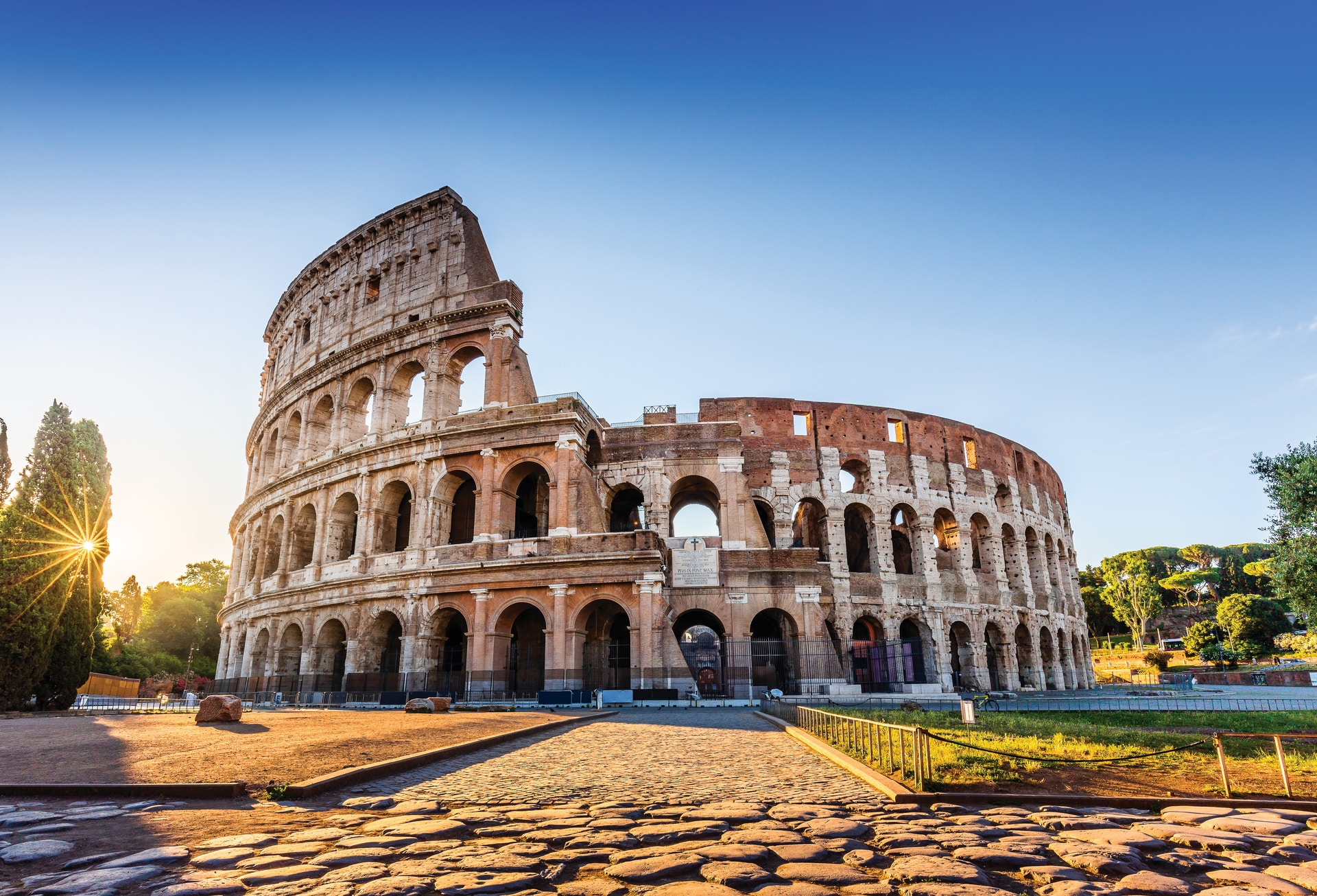
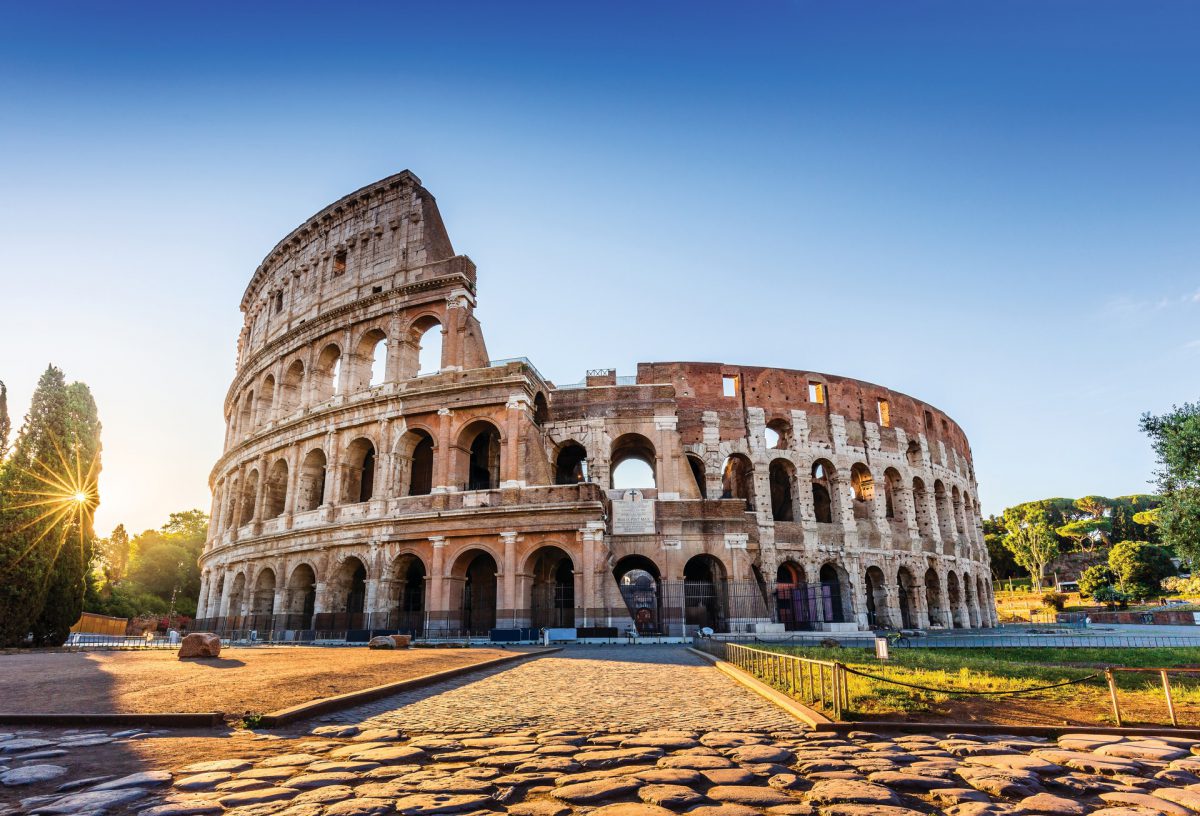
72        Coliseum begun by Emperor Vespasian (some say 70 A.D.).
76        Anencietus becomes third pope under name of St. Anacietus (Cletus).
79        Titus is emperor until 81.  Vesuvius erupts destroying Herculaneum and Pompeii.
80        Vespasian's son, Titus, stages inaugural festival in Coliseum that lasts 100 days.
81        (to 96 A.D.) Coliseum/amphitheater completed in reign of Domitian.  Domitian is
            emperor until 96.  Arch of Titus erected in the Roman Forum.
86        War against Dacians.
88        Clemens Romanus elected fourth pope named St. Clement I.
90        (to 100 A.D.) Temple of Mithras built in subterranean level of the future San
            Clemente.
94        New Curia in Roman Forum restored by Domitian.
96        Domitian is murdered.  Nerva becomes emperor until 98 and reduces taxes, repeals
            law of treason.
97        Forum of Nerva completed in Trajan's Markets.
98        Trajan succeeds Nerva as emperor until 117.  Column of Trajan and Basilica Ulpia
            begun.
99        Aristua elected fifth pope under name of St. Evaristus.

100    (to 112 A.D.) Building of Trajan's Markets.
101    (to 102 A.D.) First Dacian War.
105    (to 106 A.D.) Second Dacian War.  St. Alexander I becomes sixth pope.
109    Trajan builds Paola Aqueduct.
113    Column of Trajan inaugurated.
114    Armenia, Cesopotamia, Assyria, and Arabia become provinces.
115    Sixtus, son of Pastor, elected seventh pope under name of St. Sixtus I.
117    Death of Trajan.  Hadrian elected emperor until 138.
118    Hadrian builds new Pantheon, leaving original portico of Marcus Agrippa intact.
          Templs of Venus, Hadrian's Villa at Tivoli is built.  Hadrian's Wall in Britain is begun
          to be built.
125    Hadrian redesigns the Pantheon again.  St. Telesphorus becomes eighth pope.
130    Hadrian begins family mausoleum (Castel Sant'Angelo).
135    Temple of Venus and Rome erected by Hadrian in the Roman Forum.
136    St. Hyginus elected the ninth pope.
138    Antoninius Pius is emperor until 161.  Temple of Antoninus and Faustina begins to be
          built.
139    Hadrian's mausoleum (Castel Sant'Angelo) completed by Antoninius Pius.
140    Pius, son of Rufinus, elected 10th pope under name of St. Pius I.
141    Portico added to Temple of Antoninius and Faustina (now part of the Church of San
          Lorenzo in Miranda of the 11th century) in the Roman Forum.
145    Temple of Hadrian dedicated by Antoninius Pius in Piazza di Pietra.
155    St. Anicetus elected 11th pope.
161    Antoninius Pius dies in Vienna.  Marcus Aurelius becomes emperor until 180.
         War with Parthia, Marcomanne, and Quadi.
164    (to 180 A.D.) Plague rages in the Roman Empire.
166    Soter, son of Concordius, elected 12th pope under name of St. Soter.
174    Eleutherius, son of Habundius, becomes 13th pope under name of St. Eleutherius.
180    Commodus becomes emperor until 192.
189    Victor, son of Felix, elected 14th pope under name of St. Victor I.
193    Pertinax murdered by soldiers.  Didus Julianus buys the throne.  Emperor dies at York.
          Septimius Severus is emperor until 211.
199    St. Zephyrinus elected the 15th pope.

203    Arch of Septimius Severus in the Roman Forum is built.
211    Caracalla becomes emperor until 217.
212    Citizenship is granted to virtually all inhabitants of the Roman Empire.
216    Baths of Caracalla is completed (some say 217 A.D.).
217    St. Callixtus I elected 16th pope.  Santa Maria in Trastevere is founded by Pope
          Callixtus I.
218    Heliogabalus becomes emperor until 222.  Attempt to introduce Sun-worship.
222    Alexander Severus is emperor until 235.  Urban, son of Pontianus, elected 17th pope
          under name of St. Urban I.
230    Coliseum restored by Severus.  St. Cecilia is martyred on the site of Santa Cecilia
          in Trastevere.  Pontain, son of Calpurnius, becomes 18th pope under
          name of St. Pontain.
235    St. Anterus becomes 19th pope.
236    Fabian, son of Fabius, becomes 20th pope under name of St. Fabian.
247    Rome celebrates the first millennium of its founding (some say 248).
249    Continued persecution of Christians.
251    St. Cornelius becomes 21st pope.  Novantianus assumes the title of the first anti-pope
          under the name Novatian until about 258.
253    Lucius, son of Porphurius, becomes 22nd pope under name of St. Lucius.
254    Stephen, son of Jobius, elected 23rd pope under name of St. Stephen.
257    St. Sixtus II elected 24th pope.
258    San Lorenzo is roasted slowly to death under where San Lorenzo fuori le Mura now stands.
260    Marcus Aurelius Column is erected in Piazza Colonna.  St. Dionysius elected 25th pope.
269    St. Felix I elected 26th pope.
270    Aurelian Wall is begun.  Aurelian becomes emperor until 275.
271    Tomb incorporated into the Aurelian Wall of Castel Sant'Angelo and is fortified.
275    St. Eurychianus (or Eutychian) elected 27th pope.
283    Gaius, son of Caius, elected 28th pope under name of St. Gaius (or Caius).
284    Empire is divided into East and West.  Diocletian becomes emperor until 305.
296    Marcellinus, son of Projectus, elected 29th pope under name of St. Marcellinus.
298    Baths of Diocletian begins to be built.

4th cent:  First San Clemente is built over the courtyard of an earlier Roman building.
          San Martino ai Monti built under Sylvester I.
          Santa Pudenziana built inside a 2nd cent. bath house.
          ss Quattro Coronati built.
304    St. Agnes exposed naked to force her to renounce her faith in the now Piazza Navona
          where Sant'Agnese in Agone now stands; buried at Sant'Agnese fuori le Mura at age 15.
306    Constantine becomes co-emperor with Maxentius until 312; then is sole emperor until
          337.  Baths of Diocletian is finally finished.
308    St. Marcellus I elected as 30th pope.
309    Eusebius, son of a Greek doctor, elected 31st pope under the name of St. Eusebius.
311    St. Miltiades (or Melchiades) elected 32nd pope.
312    Control of Empire won by Constantine after the Battle of the Milvian Bridge.
313    Constantine gives Laterani site to Pope Melchiades to build San Giovanni in Laterano.
314    Five-aised Basilica of San Giovannin in Laterno is begun.  Sylvester, son of Rufinus,
          elected 33rd pope under the name of St. Sylvester (or Silvester).
315    Arch of Constantine dedicated near the Coliseum.
318    Basilica of San Giovanni in Laterano is finished.
320    (circa) Building of the first Basilica of St. Peter authorized.  Santa Croce in Gerusalemme
          is built on the grounds of part of St. Helena's (Constantine's mother) palace.
323    Christianity is recognized by the Senate under Constantine.
324    Construction of first St. Peter's begins under Constantine.  Basilica of San Giovanni in
          Laterano consecrated by Pope Sylvestr I and dedicated to the Redeemer.
325    Council of Nicaea founded; Arian conflict starts.
330    Constantinpole is begun to be built.
336    Marcus, son of Priscus, elected 34th pope under the name of St. Mark (Marcus).
          Basilica of San Marco is founded by St. Mark, the pope.
337    Constantine II is emperor until 340.  St. Julius I elected 35th pope.
349    First St. Peter's completed.
350    Founding of Santa Maria Maggiore (some say 420).
352    Liberius elected 36th pope.  Virgin appears to Pope Liberius on the site of the future
          Santa Maria Maggiore.
355    Felix II assumes the title of the second anti-pope until 358.
361    Julian the Apostate is emperor until 363.  Tries to revive paganism.
362    ss. Giovanni (John) and Paolo (Paul) beheaded in their own house by Julian the Apostate.
366    St. Damasus I elected 37th pope.
370    Ponte Cestio is restored.
378    Theodosius is emperor until 395.
380    Emperor Theodosius makes Christianity the official religion of the Roman Empire.
284    Siricius, son of Tiburtius, elected 38th pope under the name of St. Siricius.
395    Division of the Empire between Ravenna and Constantinpole.
399    Anastasius, son of Maximus, elected 39th pope under name of St. Anastasius I.

400    Alaric invades Italy.
401    St. Innocent I elected 40th pope.
404    Gladiatorial combat banned in Coliseum.  Imperial residence moved from Rome to
          Ravenna.
409    Rome abandons Britain.
410    Rome is sacked by Alaric's Goths.
415    Visigoths found kingdom at Toulouse.
417    Zosimus, son of Abram, elected 41st pope under the name St. Zosimus.
418    St. Boniface I becomes 42nd pope.  Eulalius assumes the title of the third anti-pope
          for one year.
422    Founding of Santa Sabina. St. Celestine I becomes 43rd pope.
429    Vandals found kingdom in Africa.
432    St. Sixtus III becomes 44th pope.  (432 to 440 A.D.) Sixtus III completes Santa
          Maria Maggiore.
440    St. Leo I (the Great) becomes 45th pope.
442    Coliseum is damaged by an earthquake.
449    Anglo-Saxons start to settle in Britain.
451    Aetius defeats Attila and the Huns near Chalons.
452    Venice is founded.
455    Rome is sacked again by Vandals.
460    (circa) Sant'Agata dei Goti is built.
461    Hilary becomes 46th pope under name of St. Hilarius.
462    Main Goth invasions until approximately 470 A.D.
468    Santo Stefano Rotondo begins to be built.  St. Simplicius becomes 47th pope.
472    Invasion by Ricimer the Suevian.  Some of his Germanic troops are stationed at
          Trajan's Markets.
475    Fall of Western Roman Empire.  Byzantium becomes seat of the Empire.  Romulus
         Augustulus becomes emperor until 476.
483    Santo Stefano Rotondo finished. St. Felix III (or II) becomes 48th pope.
492    St. Gelasius I becomes 49th pope.
496    St. Anastasius II becomes the 50th pope; the first pope to assume the title of
          Pontifex Maximus
498    St. Symmachus becomes the 51st pope.  Laurentius assumed the title of the fourth
          anti-pope until 505.

6th cent.:  Santa Maria d'Aracoeli is built in the Campidoglio
          ss. Apostoli is built.
500    San Martino ai Monti of the 4th century replaced by St. Symmachus.
514    St. Hormisdas becomes the 52nd pope.
523    John becomes the 53rd pope under name of St. John I.  Wild animal fights are banned
          in the Coliseum.
526    Felix of Samnium, son of Castorius, becomes 54th pope under name of St. Felix IV
          (or III).
530    Boniface, son of Sigisbald, becomes 55th pope under name of Boniface II.
533    Mercurius becomes the 56th pope under the name John II.
535    Agapetus, son of Gordianus, becomes 57th pope under the name St. Agapetus I.
536    Silverius, son of Pope Hormisdas, becomes the 58th pope under the name St. Silverius.
537    Vigilisu, son of Johannes, becomes the 59th pope under the name Vigilisu.
544    Dionysius Exiguus (person commissioned to calculate the exact death of Christ) dies.
549    Last races are held in the Circus Maximus.
552    Byzantine takeover of Rome. Trajan's Markets occupied and fortified by the army.
556    Pelagius I becomes the 60th pope.
561    John, son of Anastasius, elected the 61st pope under the name John III.
575    Benedict, son of Boniface, becomes the 62nd pope under the name Benedict I.  San
          Gregorio Magno is founded.
576    San Lorenzo fuori le Mura is rebuilt by Pelagius II.
578    Cross of Justin is given to Rome by Emperor Justin (now in Treasury of St. Peter).
579    Pelagius, son of Winigild, becomes 63rd pope under the name Peligius II.
590    Legendary date of the appearance of Archangel Michel above Castel Sant'Angelo.
          (to 604 A.D.)  Gregory, son of Gordianus, becomes 64th pope under the name St.
          Gregory I (the Great); strengthens the papacy.

604    Sabinian, son of Bonus, is elected 65th pope under the name Sabinian.
607    Boniface, son of John Cataadioce, becomes the 66th pope under the name Boniface III.
608    Column of Phocas is erected in the Roman Forum.  Boniface, son of John the Doctor,
          becomes the 67th pope under the name of St. Boniface IV.
609    Pantheon is consecrated as a church (Santa Maria ad Martyres) by Boniface IV.
615    St. Deusdedit (Adeodatus I) becomes the 68th pope.
619    Boniface, son of John, becomes the 69th pope under the name Boniface V.
625    Honorius I becomes the 70th pope.
630    Sant'Agnese fuori le Mura is built in Roman Byzantine style.
640    Severinus, son of Abienus, becomes the 71st pope under the name Severinus.
640    John IV becomes the 72nd pope.
642    Theodore becomes the 73rd pope under the name Theodore I.
649    Martin from Todi becomes the 74th pope under the name St. Martin I.
655    Eugene becomes the 75th pope under the name St. Eugenius I.
657    Vitalian, son of Anastasius, becomes the 76th pope under the name St. Vitalian.
663    Byzantine Emperor Constans II strips the gilded roof tiles from the Pantheon.
672    Adeodatus II becomes 77th pope.
676    Donus, son of Maurice, becomes the 76th pope under the name Donus.
678    St. Agatho becomes the 79th pope.
682    Leo becomes the 80th pope under the name St. Leo II.
684    Benedict, son of John, becomes the 81st pope under the name St. Benedict II.
685    John becomes the 82nd pope under the name John V.
686    Conon becomes the 83rd pope under Pope Conon.
687    Sergius, son of Tiberius, becomes the 84th pope under the name St. Sergius I.
 

701    John VI becomes the 85th pope.
705    John, son of Plato, becomes the 86th pope under the name John VII.
708    Sisinnius, son of John, becomes the 87th pope under the name Pope Sisinnius.
708    Constantine becomes the 88th pope under the name Pope Constantine.
715    Gregory, son of Marcellus, becomes the 89th pope under the name St. Gregory II.
720    San Giovanni a Porta Latina rebuilt.
725    King Ine of Wessex founds the first hostel for pilgrims in the Borgo District of Rome.
731    Gregory, son of John of Syria, becomes the 90th pope under the name St. Gregory III.
735    Gregory III roofs the Pantheon in lead.
741    Zacharias, son of Polichranus, becomes the 91st pope under the name St. Zacharias
          (Zachary).
752    Stephen II becomes the 92nd pope.  Stephen II assumes the title of the fifth anti-pope
         for less than a year.  Stephen III becomes the 93rd pope.
757    St. Paul I becomes the 94th pope.
767    Stephen IV becomes the 95th pope.  Constantine II assumes the title of the sixth anti-
          pope until 768.
772    Adrian I becomes the 96th pope.
778    Charlemagne, King of the Franks, conquers Italy.
795    Leo, son of Atyuppius and Elizabeth, becomes the 97th pope under the name
          St. Leo III.

9th cent.:  San Martino ai Monti rebuilt; Santa Prassede built over 2nd century oratory.
800    Charlemagne is crowned Holy Roman Emperor in St. Peter's.
816    Stephen V becomes the 98th pope.
817    Pashal becomes the 99th pope under the name St. Pashal I.
820    St. Cecilia's body found in Crypt of Santa Cecilia at the Catacombs of San Callisto.
824    Archpriest Eugene becomes the 100th pope under the name Eugenius II.
827    Valentine becomes the 101th pope.
827    Gregory, son of John, becomes the 102nd pope under the name Gregory IV.
844    Sergius II becomes the 103rd pope.
845    Rome is sacked by the Saracens.
846    Construction of the Pope's Wall begins.
847    Leo, son of Radoald, becomes the 104th pope under the name of St. Leo IV.
852    Vatican is fortified with walls following a raid by the Saracens.
855    Cad. Priest of St. Calixtus becomes the 105th pope under the name Benedict III.
          Anastasius assumes the title of the seventh anti-pope for less than a year.
858    Nicholas becomes the 106th pope under the name St. Nicholas I the Great.
867    Reputed transfer of the remains of San Celemente to Rome.  Adrian II becomes th
          107th pope.
870    John becomes the 108th pope under the name John VIII.
880    (to 932 A.D.) Rome is ruled by two women - Theodora and her daughter, Marozia.
882    Marinus, son of Palumbo, becomes the 109th pope under the name of Marinus I.
884    St. Adrian III becomes the 110th pope.
885    Stephen, son of Hadrian, becomes the 111th pope under the name Stephen VI.
891    Formosus becomes the 112th pope.
896    San Giovanni in Laterano is damaged by an earthquake.  Boniface, son of Adrian,
          becomes the 113th pope under the name Boniface VI.  Stephen, son of John,
          becomes the 114th pope under the name Stephen VII.
897    Romanus, son of Constantine, becomes the 115th pope under the name of
          Romanus.  Theodore, son of Photius, becomes the 115th pope under the name
          Theodore II.
898    John, son of Rampoald, becomes the 117th pope under the name John IX.

900    Benedict, son of Mammalus, becomes the 118th pope, under the name Benedict IV.
903    Leo Britigea becomes the 119th pope under the name Leo V.
904    Sergius, son of Benedict, becomes the 120th pope under the name Sergius III. (904
          to 911 A.D.)  San Giovanni in Laterano is rebuilt under Sergius III.
911    Anastasius, son of Lucian, becomes the 121st pope under the name Anastasius III.
913    Landus, son of Taino, becomes the 122nd pope under the name Lando (or Landus).
914    John becomes the 123rd pope under the name of John X.
928    Leo, son of Christopher, becomes the 124th pope under the name Leo VI.
929    Stephen, son of Teudemund, becomes the 125th pope under the name Stephen VIII.
931    John, son of Marozia, becomes the 126th pope under the name John XI.
936    Leo, priest of St. Sixtus, becomes the 127th pope under the name Leo VII.
939    Stephen IX becomes the 128th pope.
942    Marinus becomes the 129th pope under the name Marinus II (or Martin III).
946    Agapetus II becomes the 130th pope.
955    Octavian "Boy Pope" becomes the 131st pope under the name of John XII.
961    King Otto the Great becomes the first German Holy Roman Emperor.
963    Leo becoms the 132nd pope under the name of Leo VIII.
964    Benedict V becomes the 133rd pope.
965    John the Good becomes the 134th pope under the name John XIII.
973    Benedict, son of Hildebrand, becomes the 135th pope under the name Benedict VI.
974    Benedict, Bishop of Sutri, becomes the 136th pope under the name Benedict VII.
        Boniface VII assumes the title of the eighth anti-pope for less than a year.
983    Peter Canepanova becomes the 137th pope under the name John XIV.
985    John, card. priest of St. Vitalis, becomes the 138th pope under the name John XV.
996    Bruno, son of Duke Otto of Carinthia, becomes the 139th pope under the name
          Gregory V.
997    Philagethus assumes the title of the ninth anti-pope under the name John XVI for
          one year.
999    Gerbert becomes the 140th pope under the name of Sylvester II.

1003    John Sicco becomes the 141st pope under the name of John XVII.  John Phasanus
            becomes the 142nd pope under the name of John XVIII.
1998    Peter Pig's Snout (Bucca Porci) becomes the 143rd pope under the name of
            Sergius IV.
1012    Benedict of the House of Theophylactus becomes the 144th pope under the name
            Benedict VIII.
1024    Romanus becomes the 145th pope under the name John XIX.
1032    Theophylactus becomes the 146th pope under the name Benedict IX.
1045    Sylvester III becomes the 147th pope.  Benedict IX becomes the 148th pope
            (he was also the 146th pope).  Johannes Gratianus becomes the 149th pope under
            the name Gregory VI.  Sylvester III assumes the title of the 10th anti-pope for
            less than one year.
1046    Suidger, Bishop of Bamberg, becomes the 150th pope under the name Clement II.
1047    Theophylactus, 146th and 148th pope, again becomes pope (151st) under the name
            Benedixt IX.  Benedict IX assumes the title of the 11th anti-pope for one year.
1048    Poppo, Bishop of Brixen, becomes the 152nd pope under the name Damasus II.
1049    Bruno becomes the 153rd pope under the name St. Leo X.
1055    Gebhard, Count of Claw, becomes the 154th pope under the name Victor II.
1057    Frederick, son of the Duke of Lorraine, becomes the 155th pope under the name
            Stephen X.
1058    Gerard becomes the 156th pope under the name Nicholas II.
1061    Anselm of Lucca becomes the 157th pope under the name Alexander II.
            Honorius II assumes the title of the 12th antipope until 1064.
1073    Hildebrand becomes the 158th pope under the name St. Gregory VII..
1075    Gregory VII is kidnapped by opponents while reading Christmas mass at Santa
            Maria Maggiore.
1080    Guibert of Ravenna assumes the title of the 13th anti-pope for less than a year
            under the name of Clement III.
1084    Rome is attacked by the Normans.  San Clemente destroyed during invasion.
            Guibert of Ravenna assumes the title of the 13th anti-pope again until 1100 under
            the name Clement III.
1085    Santi Quattro Coronati rebuilt after fire from invasion of 1084.
1086    Dauferius, or Daufar, becomes the 159th pope under the name Blessed
            Victor III.
1088    Otho, Otto, or Odo of Lagery becomes the 160th pope under the name Blessed
            Urban II.
1099    Rainerius (a monk) becomes the 161st pope under the name of Pashal II.  Paschal II
            builds Chapel (Santa Maria del Popolo) over tombs of the Domitia family (which
            included Nero) in honor of the Madonna.

12th cent.:  San Lorenzo in Lucina rebuilt, built over well sacred to Juno.  Sant'Andrea delle
            Fratte built.
1105    Sylvester IV assumed the title of the 14th anti-pope until 1111.
1108    San Clemente is rebuilt over the 4th century church.
1118    Giovanni da Gaeta becomes the 162nd pope under the name Gelasius II.  Maurice
            Bourdin assumed the title of the 15th anti-pope under the name of Gregory VIII until
            1121.
1119    Guido of Vienna becomes the 163rd pope under the name Calixtus II.
1124    Lambert Scannabecchi becomes the 164th pope under the name Honorius II.
            Celestine II  assumed the title of the 16th anti-pope for less than a year.
1130    Card. Gregory Papareschi becomes the 165th pope under the name Innocent II.
            Pietro Pierieoni assumed the title of the 17th anti-pope under the name Anacietus II
            until 1138.
1138    (circa)  Pope Innocent II starts rebuilding Santa Maria in Trastevere.  Gregorio Conti
            assumed the title of the 18th anti-pope for less than a year as Victor IV.
1139    Octavius assumed the title of the 19th anti-pope until 1164, also under the name
            Victor IV.
1140    Santa Maria in Trastevere is again restored.
1143    Guido de Castellis becomes the 166th pope under the name Celestine II.
1144    San Giovanni in Laterano is dedicated.  Gerard Caccianemici becomes the 167th
           pope under the name Lucius II.
1145    Bernard Paganelli becomes the 168th pope under the name Blessed Eugenius III.
1153    Conrad becomes the 169th pope under the name Anastasius IV.
1154    Nicholas Breakspear becomes the 170th pope under the name Adrian IV.
1159    Orlando Bandinelli becomes the 171st pope under the name Alexander III.
1164    Guido of Crema assumed the title of the 20th anti-pope under the name Paschal III
            until 1168.
1168    Calixtus III assumed the title of the 21st anti-pope until 1178.
1179    Lando dei Frangipani assumed the title of the 22nd anti-pope under the name Innocent III
            until 1180.
1181    Ubaldus Allucingolus becomes the 172nd pope under the name Lucius III.
1185    Uberto (Crivelli) becomes the 173rd pope under the name Urban III.
1187    Alberto Di Morra becomes the 174th pope under the name Gregory VIII.
1187    Paul Scolari becomes the 175th pope under the name Clement III.
1191    Hyacinth Bobo becomes the 176th pope under the name Celestine III.  San Giovanni a
            Porta Latina is restored.
1198    Lotario de'Conti becomes the 177th pope under the name Innocent III.  He creates
            the Papal Palace (now the Vatican Museums).

13th cent.:  Torre delle Milizie built on top of Trajan's Markets; Frangipane family turn Coliseum
            into fortress.  Santa Maria sopra Minerva built over Temple to Minerva.
1200    Rome becomes an independent commune under Arnaldo di Brescia.
1213    Santa Maria del Popolo starts to be enlarged under Gregory IX.
1217    San Sisto Vecchio granted/built St. Dominic by Honorius III.  Five-story bell tower
            is added to ss. Bonifacio e Alessio.
1216    Cencio Savelli becomes the 178th pope under the name Honorius III.
1219    St. Francis of Assisi lives in hospice on the side of San Francesco a Ripa.
1220    Cloisters (first of its kind) added to ss. Quattro Coronati.
1227    Expansion of Santa Maria del Popolo completed.  Ugolino de'Conti becomes the 179th
            pope under the name Gregory IX.
1232    Cloister of San Giovanni in Laterano completed.
1241    Gofredo Castiglioni becomes the 180th pope under the name Celestine IV.
1243    Sinibaldo de'Fieschi becomes the 181st pope under the name Innocent IV.
1254    Rinaldo Conti becomes the 182nd pope under the name Alexander IV.
1261    Jacques Pantaleon becomes the 183rd pope under the name Urban IV.
1265    Guy Foulques becomes the 184th pope under the name Clement IV.
1271    Tedaldo Visconti becomes the 185th pope under the name Blessed Gregory X.
1276    Peter of Tarentaise becomes the 186th pope under the name Blessed Innocent V.
            Ottobuono Fieschi becomes the 187th pope under the name Adrian V.  Peter Juliani
            becomes the 188th pope under the name John XXI.
1277    Giovanni Orsini becomes the 189th pope under the name Nicholas III.
1281    Simon de Brion becomes the 190th pope under the name Martin IV.
1285    Giacomo Savelli becomes the 191st pope under the name Honorius IV.
1288    Jerome Masci becomes the 192nd pope under the name Nicholas IV.
         (1288 to 1292)  Nicholas IV adds apse and transepts to Santa Maria Maggiore.
1291    Pietro Cavallini adds mosaics of scene from the life of the Virgin for his patron,
            Bertoldo Stefaneschi in Santa Maria in Trastevere.
1294    Pietro di Murrone becomes the 193rd pope under the name St. Celestine IV.
            Benedict Caetani becomes the 194th pope under the name Boniface VIII.
1295    Gold frescoes by Pietro Cavallini are added to apse of San Giorgio in Velabro.

14th cent.:  Annibaldi and Caetani families vie for control of Trajan's Markets area.
1300    First Holy Year is proclaimed by Pope Boniface VIII.
1303    Nicholas Boccasini becomes the 195th pope under the name Blessed Benedict XI.
          Tomb of Cardinal Stefanus de Surdis is built in Santa Balbina by Giovanni di Cosma.
1305    Pantheon used as fortress and poultry market until 1377.  Bertrand de Got. Bertrand
            becomes the 196th pope under the name Clement V.
1308    San Giovanni in Laterano destroyed by fire.
1309    Pope Clement V moves papacy to Avignon.
1312    Emperor Henry VII gives Coliseum to the Senate and to the people of Rome.
1316    Jacques d'Euse becomes the 197th pope under the name John XXII.
1328    Pietro Rainalducci assumed the title of the 23rd anti-pope under the name of
            Nicholas V until 1330.
1334    Jacques Fournier becomes the 198th pope under the name Benedict XII.
1342    Pierre Roger becomes the 199th pope under the name Clement VI.
1347    Cola di Rienzo crowned Tribune of Rome in Santa Maria Maggiore.  Cola di Rienzo,
            an Italian patriot, tries to restore the Roman Republic.
1348    Black Death strikes Rome; 124-marble-step staircase to Santa Maria d'Aracoeli
            completed.
1352    Etienne Aubert becomes the 200th pope under the name Inocent VI.
1360    San Giovanni in Laterano burnt down a second time.
1362    Guillaume de Grimoard becomes the 201st pope under the name Blessed Urban V.
1370    Pierre Roger de Beaufort becomes the 202nd pope under the name Gregory XI.
1377    Papacy returned to Rome from Avignon under Pope Gregory XI.
1378    (to 1417) The Great Schism, a division in the papacy in Avignon.  Bartolomeo
            Prignano becomes the 203rd pope under the name Urban VI.  Robert of Geneva
            assumed the title of the 24th anti-pope under the name Clement VII until 1394.
1380    St. Caterina of Siena died in Rome and buried in Santa Maria sopra Minerva.
1389    Pietro Tomacelli becomes the 204th pope under the name Boniface IX.
1390    Pope Boniface IX remodels Castel Sant'Angelo.
1394    Pedro de Luna assumed the title of the 25th anti-pope under the name
            Benedict XIII until 1423.

15th cent.:  (through 16th cent.) Ruins of Coliseum used as a quarry.  Travertine blocks
            recycled by popes.  Palazzo Capranica built.  ss Apostoli rebuilt by Popes
            Martin V Colonna and Sixtus IV della Rovere.
1406    Cosimo de'Migliorati becomes the 205th pope under the name Innocent VII.
            Angelo Corrario becomes the 206th pope under the name Gregory XII.
1410    John XXIII assumed the title of the 26th anti-pope until 1415 (not the same as
            Pope John XXIII).
1417    Oddone Colonna becomes the 207th pope under the name Martin V.
            Pope Martin V ends the Great Schism in the papacy.  Pope Martin V Colonna
            builds Palazzo Colonna.
1419    Sant'Onofrio is founded.
1424    Benedict XIV was the 28th  anti-pope for less than a year.  Gil Sanchez Munoz
            assumed the title of  the 27th anti-pope under the name Clement VIII  until 1429.
1431    Gabriele Condulmer becomes the 208th pope under the name Eugenius IV
            (Eugene IV).
1435    Palazzo Doria Pamphilj begins to be built.
1439    Amadeus assumed the title of the 29th and last anti-pope as Felix V until 1449.
1444    Birth of Bramante.
1445    Fontana della Scrofa built in Rome.
1447    Tommaso Parentucelli becomes the 209th pope under the name Nicholas V.
1452    Demolition of old St. Peter's begins; Nicholas V plans restoration.
1454    Florentine cupola is added to San Teodora.
1455    Alfonso de Borja (Borgia) becomes the 210th pope under the name Calixtus III.
            (1455 to 1471)  Basilica of San Marco restored; Pope Paul II made it church of the
            Venetians.   Palazzo Venezia built for Pietro Barbo (later Paul II).  Painter Fra
            Angelico died in Rome and is buried in Santa Maria sopra Minerva.
1458    Aeneas Sulvius Piccolomini becomes the 211th pope under the name Pius II.
1464    Pietro Barbo becomes the 212th pope under the name Paul II.
1470    Santa Maria della Consolazione built.
1471    Sant'Ambrogio is built. Francesco Della Rovere becomes the 213th pope under
            the name Sixtus IV.
1472    (to 1478) Sixtus IV builds a new Santa Maria del Popolo, one of the first Renaissance
            churches in Rome.
1473    Main altar of Santa Maria del Popolo built.  Sixtus IV builds the Sistine Chapel.
1474    (circa) Ponte Sisto is bilt by Baccio Pontelli.
1475    Birth of Michelangelo.  Hospital of Santo Spirito reorganized by Sixtus IV.
1480    (circa) Santa Maria della Pace is commissioned.  Palazzo dei Penitenzieri (now Hotel
            Columbus) built for Cardinal Domenico della Rovere.
1483    Birth of Raphael.  Tomb of Giovanni della Rovere constructed in Santa Maria del
            Popolo by pupils of Andrea Bregno.
1484    Giovanni Battista Cibo becomes the 214th pope under the name Innocent VIII.
1485    (to 1489)  Della Rovere Chapel in Santa Maria del Popolo painted by Pinturicchio.
1486    Building of Palazzo della Cancelleria begins.
1490    San Giovanni Decollato is built.
1492    Rodrigo Borgia becomes the 215th pope under the name Alexander VI.
1493    Alexander VI restores the Vatican Corridor (Passetto) to Castel Sant'Angelo.
1495    Trinita dei Monti is built by the French.
1496    Palazzo Torlonia is built by Cardinal Adriano Castellesi.
1498    Porta Settimiana is built.  Michelangelo starts the Pieta for St. Peter's.
1499    Michelangelo finishes the Pieta at age 25.

16th cent.:  San Giuseppe dei Falegnami built over Mamertine Prison in Forum.  Santa Maria
            dell'Anima built.  Palazzo Massimo built by Baldassarre Peruzzi.  Palazzo del Banco
            di Spirito Santo's upper floors built by Antonio da Sangallo the Younger.  Palazzo
            Gaddi on via del Banco di Spirito Santo built by Cardinal Gaddi.  Villa Medici built.
            Porta del Popolo built on orders of Pius IV Medici by architect Nanni di Baccio Bigio.
            Fontana della Navicella built in Piazza di Santa Maria in Domnica.  Santissima
            Trinita dei Pellegrini built.  Santa Maria dell'Orazione e Morte built.  San Giovanni dei
            Fiorentini started.  Villa Aldobrandini built for dukes of Urbino.  Later part of 16th
            century, San Salvatore in Lauro built by Ottaviano Mascherino.
1501    Pasquino (talking statue) is moved to Piazza di Pasquino.
1502    Bramante builds the Tempietto in the courtyard of San Pietro in Montorio.
1503    Francesco Todeschini Piccolomini becomes the 216th pope under the name Pius III.
            Giulano Della Rovere becomes the 217th pope under the name Julius II.
            (1503 to 1513) Julius II starts Classical sculpture collection for Papal Palace (now
            Vatican Museums).   Pope Julius II chooses Bramante as architect of new St. Peter's
            Basilica.  Bramante lays out Belvedere Courtyard at Papal Palace.
1504    Cloisters are added to Santa Maria della Pace by Bramante.
1505    Michelangelo commissioned by Julius II to build his tomb in San Pietro in Vincoli
            (Moses).  The Laocoon (carved in the 1st cent.) is discovered on the Esquiline in Nero's
            Golden House (Domus Aurea).
1506    Santa Maria di Monserrato, Rome's Spanish church, is built.  Pope Julius II orders
            start of work on new St. Peter's.  Sculptor Andrea Bregno died and is buried in
            Santa Maria sopra Minerva.
1508    Michelangelo begins painting the Sistine Chapel ceiling.  Villa Farnesina begins
            construction.
1509    Rome's first stained-glass windows were put in Santa Maria del Popolo by French
            artist Guillaume de Marcillat.  Raphael begins work on the Raphael's Rooms in Papal
            Palace.
1511    Martin Luther arrives in Rome.  Cardinal Francesco Alidosi is murdered by the Duke
            of Urbino.
1513    Giovanni De'Medici becomes the 218th pope under the name Leo X.  After the
            Sistine Chapel, Michelangelo resumes work on the Tomb of Julius II in San Pietro in
            Vincoli.  Pulled off again to begin work on the "Last Judgment" on the wall of the
            Sistine Chapel by Julius II.  (1513 to 1516)  Raphael designs and builds the Chigi
            Chapel in Santa Maria del Popolo.
1514    Raphael named director of works for the new St. Peter's.
1518    San Luigi dei Francesi started by Domenico Fontana and Giacomo della Porta.
1519    Frescoes completed in Villa Farnesina.
1520    Raphael dies and is buried in tomb in the Pantheon.
1522    Guiccidardini Dedel becomes the 219th pope under the name Adrian VI.
1523    Piccola Farnesina built for Thomas Leroy (French clergyman).  Giulio de'Medici
            becomes the 220th pope under the name Clement VII.
1524    Tomb to Raphael embellished by Lorenzetto in the Pantheon.
1527    Troops of Emperor Charles V sack Rome; Castel Sant'Angelo survives the attack.
1528    Many chuches begin rebuilding after the Sack of 1527.
1530    (to 1534) Chigi Chapel altarpiece in Santa Maria del Popolo built by Sebastiano del
            Piombo.
1531    Image of the Madonna appears on the cloak of a Mexican Indian in the Vatican
            Gardens.  Madonna of Guadalupe monument is built on this spot.
1534    Palazzo Farnese re-designed by Antonio da Sangallo the Younger for Paul III.
            Alessandro Farnese becomes the 221st pope under the name Paul III.
1537    Sangallo Bastion built and reinforcement to Aurelian Wall begun by Antonio da
            Sangallo the Younger.
1538    Antonio da Sangallo the Younger named the new director of works at St. Peter's
            after Raphael's death.  Rebuilds Santo Spirito in assia.
1539    Palazzo del Monte di Pieta founded by Paul III.
1540    Founding of the Society of Jesus (the Jesuits).  Sme say 1537.  Fontana di Palazzo
            Spada is built.  Palazzo Spada is built for Cardinal Capo di Ferro.
1542    (to 1549) Sala Paolina and apartments built at Castel Sant'Angelo for Pope Paul III.
1543    (to 1545) Porta Santo Spirito built by Antonio da Sangallo the Younger.
1545    (to 1563) Council of Trent defines new Catholic orthodoxy.
1547    Humanist Cardinal Pietro Bembo dies, buried in Santa Maria sopra Minerva.  Pope
            Paul III appoints Michelangelo chief architect of St. Peter's.
1550    Giovan Maraia Ciocchi del Monte becomes the 222nd pope under the name Julius III.
            Work begins on Villa Giulia under Julius III.
1552    Fountain of Pope Julius III begins, designed by Bartolomeo Ammannati on via Flaminia.
            San Filippo Neri institutes Visit of the Seven Churches, an annual event of walking on foot
            to the four major basilicas beginning at Chiesa Nuova and ending at Villa Mattei grounds.
1553    Giorgio Vasari paints "Beheading of St. John" for the main altar of S. Giovanni Decollato.
1554    Fountain of Pope Julius III completed.
1555    Villa Giulia is completed. Marcello Cervini becomes the 223rd pope under the name
            Marcellus II.  Giovanni Pietro Caraffa becomes the 224th pope under the name Paul IV.
1556    Death of Ignatius Loyola.
1557    Ramparts are built to protect Castel Sant'Angelo.
1559    Gian Angelo Medici becomes the 225th pope under the name Pius IV.
1562    Niche for the Cortile della Pigna (Pine-cone) at the Vatican Museums added by Pirro
            Ligorio.
1563    Michelangelo incorporates Santa Maria degli Angeli into ruins of Baths of Diocletian.
1564    Death of Michelangelo; buried in Santa Croce in Florence.  Bastians added to Porta Santo
            Spirito by Pius IV Medici.
1565    Fontana di Porta Cavalleggeri built in the wall near the Vatican on Largo di Porta
            Cavalleggeri.
1566    Michele Ghisleri becomes the 226th pope under the name St. Pius V.  Santa Maria in
            Traspontina begun to be rebuilt.  Original destroyed by cannon fire from Castel Sant'Angelo
            during the Sack of 1527.
1568    Obelisk that was in Nero's Circus to the side of the ancient Necropolis on Vatican Hill moved
            to the center of St. Peter's Square.  It took 47 winches and 150 horses to move it.
            (to 1571) Vignola builds Gesu up to the crossing under patronage of Card. Alessandro
            Farnese.
1570    Facade of Santa Maria in Trivio added.
1571    Birth of Caravaggio.  Giocomo dell Porta's design chosen for facade of Gesu.
1572    Convent of Santa Caterina da Siena Built over part of Trajan's Markets.  Ugo
            Buoncompagni becomes the 227th pope under the name Gregory XIII.
1574    Fontana di Nettuno built by Giacomo della Porta.  Palazzo del Quirinale begun.
1575    Fontana del Moro in Piazza Navona built by Giacomo della Porta and G.L. Bernini.
            Fontana del Pantheon designed by Giacommo della Porta, built by Leonardo Sormani.
            Chiesa Nuova begun by Matteo da Citta di Castello, continued by Martino Longhi the
            Elder.  Filippini religious order founded by Filippo Nero.  Fontana di Piazza Colonna
            built by Giacomo della Porta.
1577    Villa Farnesina is bought by Cardinal Alessandro Farnese.
1580    Santa Maria dei Monte built by Giacomo della Porta.  Martino Longhi the Elder
            restores Santa Maria in Trastevere and builds family chapel for Card. Marco Sittico
            Altemps.  Villa Mattei (Celimontana) is begun to be built.
1581    Fontana delle Tartarughe begun by Taddeo Landini and Giacomo della Porta.
1582    Gregorian calendar adopted under Pope Gregory XIII and decreed in February.
1583    Martino Longhi begins reconstruction of Santa Maria della Consolazione.
1584    Gesu consecrated.  Fontana della Tartarughe completed.
1585    Felice Peretti becomes the 228th pope under the name Sixtus V.  Pope Sixtus V
            plans new streets in Rome.  Facade is added to Santo Spirito in Sassia.
1586    Domenico Fontana builds north facade to San Giovanni in Laterano.
1587    Moses Fountain is built.
1588    Marcus Aurelius Column restored by Domenico Fontana.  Castor and Pollux
            statues brought from Baths of Constantine and placed in Piazza del Quirinale.
1589    Fontana Ara Coeli built by Diacomo della Porta in Piazza d'Aracoeli.  Fontana della
            Terrina by Giacomo della Porta built in Piazza Chiesa Nuova.  San Luigi dei Francesci
            completed.   3,000-year-old obelisk erected in Piazza del Popolo by Domenico Fontana.
            Palazzo Farnese completed.  Domenico Fontana builds building around the Scala Sancta
            and Sancta Sanctorum.
1590    (circa) Fontanella del Facchino (talking statue) built into wall of Banco di Roma.
            Giambattista Castagna becomes the 229th pope under the name Urban VII.  Niccolo
            Spondrati becomes the 230th pope under the name Gregory XIV.
1591    Gian Antonio Facchinetti becomes the 231st pope under the name Innocent IX.
1592    Ippolito Aldobrandini becomes the 232nd pope under the name Clement VIII.
1593    Michelangelo's Dom of St. Peter's completed.  Fontana Santa Sabina by Giacomo della
            Porta built.  La Quattro Fontane built.
1595    Annibale Carracci begins to fresco Palazzo Farnese.
1597    (to 1602) Caravaggio paints three paintings for San Luigi dei Francesci on the life of
           St. Matthew.
1598    Birth of Gian Lorenzo Bernini.  Contessa Caterina Nobili Sforza turns tower ruins of the
            Baths of Diocletian into the Church of San Bernardo alle Terme.  Is buried there also.
1599    Birth of Francesco Borromini.  Chiesa Nuova completed.  San Nicola in Carcere rebuilt.

17th cent.:  Palazzo Pio Righetti built in Campo de'Fiori District.  Late 17th century, Palazzo Altieri
            built by Card. Emilio ALtieri (Pope Clement V).
1600    Philosopher Giordano Bruno is burned at the stake for heresy.
1601    (to 1647) Second courtyard and flanking wings are added to Palazzo Doria Pamphilj.
1603    Accademia dei Lincei is founded (learned society) at Palazzo Corsini.  Galileo was a member
            of this learned society.  Facade to Santa Susanna is added by Carlo Maderno.
1605    Allesandro Ottaviano de'Medici becomes the 233rd pope under the name Leo XI.  Camillo
          Borghese becomes the 234th pope under the name Paul V.  Banco di Santo Spirito founded
            by Paul V Borghese.  Palazzo Borghese is acquired by Card. Camilio Borghese (Paul V).
1606    Carlo Maderno extends Basilica of St. Peter's.  Facade to Chiesa Nuova is added by Fausto
            Rughesi.  Santa Maria della Consolazione reconstructed is completed.
1608    St. Francesca Romana canonized.
1610    Sant'Ambrogio rebuilt by Carlo Borromeo and renamed ss. Ambrogio e Carlo.
1611    Cappella Paolina decorated by Flaminio Ponzio in Santa Maria Maggiore for Paul V
            Borghese.    (to 1612) Fontana dell'Aquila built by Stefano Maderno, Citta del Vaticano.
1612    Fontana dell'Acqua Paola in Janiculum built for Pope Paul V.  Reopening of the Aqueduct built
            by Trajan in 109 A.D. is re-opened with commemoration of the Fountain.
1613    (to 1615) Flemish architect Jan van Santen designs and builds Villa Borghese; 15-year-old
            Bernini sculpts "Aeneas and Anchises" (now at Museo Borghese).
1614    San Giovanni dei Fiorentini completed after 100 years.  Maderno finishes facade of St. Peter's.
            Fontana del Carlo Maderno built in St. Peter's Square.  Fontana di Sant'Andrea della Valle
            built also by Carlo Maderno.
1615    Bronze Madonna and Child added to the ancient column in Piazza di Santa Maria Maggiore.
1617    Domenichino designs coffered ceiling in Santa Maria in Trastevere with octagonal planel of the
            "Assumption of the Virgin".
1620    (to 1621) Fountain of the Galley built in the courtyard of the Vatican Museums.  San Carlo ai
            Catinari built.
1621    (to 1625) Bernini sculpts "Pluto and Persephone" (in Museo Borghese).  Allesandro Ludovisi
            becomes the 235th pope under the name Gregory XV.
1622    Ignatius Loyola canonized.  Sant'Andrea della Valle started by Carlo Maderno.
1623    Maffeo Barberini becomes the 236th pope under the name Urban VIII.
1624    Bernini's sculpture of "Apollo and Daphne" done (some say between 1622-25).
1625    Sant'Andrea della Valle completed.
1626    Sant'Ignazio di Loyola built by Card. Ludovisi.  Fontana di Piazza Farnese by Girolamo
            Rainaldi built.  Work on St. Peter's is completed and consecrated.  Fountain of the Mask is
            built near Villa Farnesina.  Santa Maria della Concezione is founded.
1627    Fontana della Barcaccia begun by P. Bernin at Piazza di Spagna.
1629    Fontana della Barcaccia completed.  San Gregorio Magno begins restoration.  Carlo Maderno
            dies in Rome.
1630    Sant'Egidio is built adjoining the Carmelite convent (now houses the Museo del Folklore).
1632    Urban III melts down bronze from Pantheon portico for Bernini's baldacchino in St. Peter's.
1633    Galileo condemned to death in Rome for heresy; buried in Santa Croce, Florence, across
            from Michelangelo.  San Gregorio Magno reconstruction is completed.  Pietro da Cortona
            begins ceiling fresco "Triumph of Divine Providence" in Palazzo Barberini (finishes in 1639).
1634    Borromini builds San Carlo alle Quattro Fontane.
1637    (to 1643) Curved brick facade by Borromini added to Oratorio dei Filippini.
1640    ss. Luca e Martina completely rebuilt by Pietro da Cortona.  Santa Maria dei Sette Dolori
            is designed by Borromini.
1641    Fontana dell Api by Bernini constructed at corner of via Veneto and Piazza Barberini.
1642    (to 1643) Triton Fountain by Bernini built in Piazza Barberini.  Sant'Ivo alla Sapienza built by
            Borromini.  Fontana di San Pietro in Vincoli in courtyard over well built by Card. Antonio
            Barberini.
1644    Giambattista Pamfili becomes the 237th pope under the name Innocent X.  Fontana delle Api
            built by Bernini at corner of Via Veneto and Piazza Barberini.
1646    Borromini rebuilds interior of San Giovanni in Laterano.  Bernini sculpts "Ecstasy of St.
            Teresa" for Santa Maria della Vittoria.
1647    (to 1648) Borromini adds clock tower to Convent of the Oratorio dei Filippini.
1648    Fontana dei Fiumi started by Bernin in Piazza Navona.
1650    San Martino ai Monti totally rebuilt for the fourth time during the 1650s.  ss Vincenzo e
            Anastasio built by Martino Longhi the Younger.
1651    Bernini redesigns much of Piazza Navona.  Fontana Fiumi unveiled.
1652    (to 1657) Sant'Angese in Agone commissioned and built by Girolamo and Carlo Rainaldi,
            but finished by Borromini.
1653    Fontana del Moro in Piazza Navona remodeled by Bernini.
1654    Art gallery at Palazzo Colonna opens, built by Antonio del Grande.  Michenangelo-designed
            Palazzo Nuovo, Piazza del Campidoglio, and Cordonata is completed.
1655    Queen Christina of Sweden stays at Villa Giulia as Vatican guest.  Bernini designs Scala
            Regia at Papal Palace.  Fabio Chigi becomes the 238th pope under the name Alexander VII.
1656    Santa Maria in Campitelli begun by Carlo Rainadli.  Works starts on Bernini's Colonnade
            for St. Peter's Square.  Pietro da Cortona restores Santa Maria della Pace by adding portico.
1657    Borromini completes Sant'Angese in Agone.
1658    Bernini starts Sant'Andrea al Quirinale.
1662    Collegio di Propaganda Fide built for Jesuits near Piazza di Spagna.
1667    Bernini mounts recently discovered obelisk onto marble elephant in Piazza di Santa Maria
            sopra Minerva.  Santa Maria in Campitelli completed.  Facade by Borromini on San Carlo
            alle Quattro Fontane finished.  San Clemente and convent given to the Irish Dominicans.
           Death of Francesco Borromini by suicide.  Giulio Rospigliosi becomes the 239th pope
            under the name Clement IX.
1670    Emilio Altieri becomes the 240th pope under the name Clement X.  (1670 to 1683)
            Giovanni Battista Gaulli (Il Baciccia) paints the nave vault, dome, and apse of Gesu.
            Sant'Andrea al Quirinale is finished.
1673    Carlo Rainaldi rebuilds apse in Santa Maria Maggiore.
1676    Benedetto Odescalchi becomes the 241st pope under the name Blessed Innocent XI.
1680    Death of Gian Lorenzo Bernini; buried in Santa Maria Maggiore.  San Francesco a Ripa
            is rebuilt by Cardinal Pallevicini.
1685    Andrea Pozzo paints ceiling of Sant'Ignazio di Loyola.  Santa Maria in Campo Marzio
            rebuilt by Antonio de Rossi.
1689    Pietro Ottoboni becomes the 242nd pope under the name Alexander VIII.  Queen
            Christina of Sweden dies at Palazzo Corsini.
1690    Carlo Fontana alters the design of Fontana Paola.
1691    Antonio Pignatelli becomes the 243rd pope under the name Innocent XII.
1694    Fontana Gioacchino Belli by Carlo Fontana built in Piazza Gioaccino Belli.  Fontana di
            Santa Maria in Trastevere reconstructed by Carlo Fontana.  Palazzo di Montecitorio
            started by Carlo Fontana.
1696    (to 1700) Chapel of Sant'Ignazio designed by Andrea Pozzo (Jesuit artist) for Gesu.
1697    Palazzo di Montecitorio completed.

18th cent.:  Bell tower and sacristy added to San Salvatore in Lauro by Nicola Salvi.
            Sant'Appolinare is rebuilt.  Late 18th century, Palazzo Braschi built in Piazza San Pantaleo,
            last palace built for a pope (Pope VI), now the Museo di Roma.
1700    Gian Francesco Albani becomes the 244th pope under the name Clement XI.
1702    Pope Clement XI has Santa Maria in Trastevere portico rebuilt.
1705    Outer courtyard of San Teodora is designed by Carlo Fontana and added.
1714    Architect Carlo Fontana dies in Rome.
1715    Fontana dei Tritoni by Carlo Bizzaccheri is built in Piazza della Bocca Verita.
1718    ss. Giovanni e Paolo is remodeled.
1721    Bonnie Prince Charlie is born in Rome.  Michelangelo de'Conti becomes the 245th
            pope under the name Innocent XIII.
1724    Pietro Francesco Orsini becomes the 246th pope under the name Benedict XIII.
1726    Spanish Steps is completed.
1727    (to 1729) Piazza di Sant'Ignazio built by Filippo Raguzzini.
1730    Lorenzo Corsini becomes the 247th pope under the name Clement XII.
            (1730 to 1740) Alessandro Galilei builds main facade to San Giovanni in Laterano.
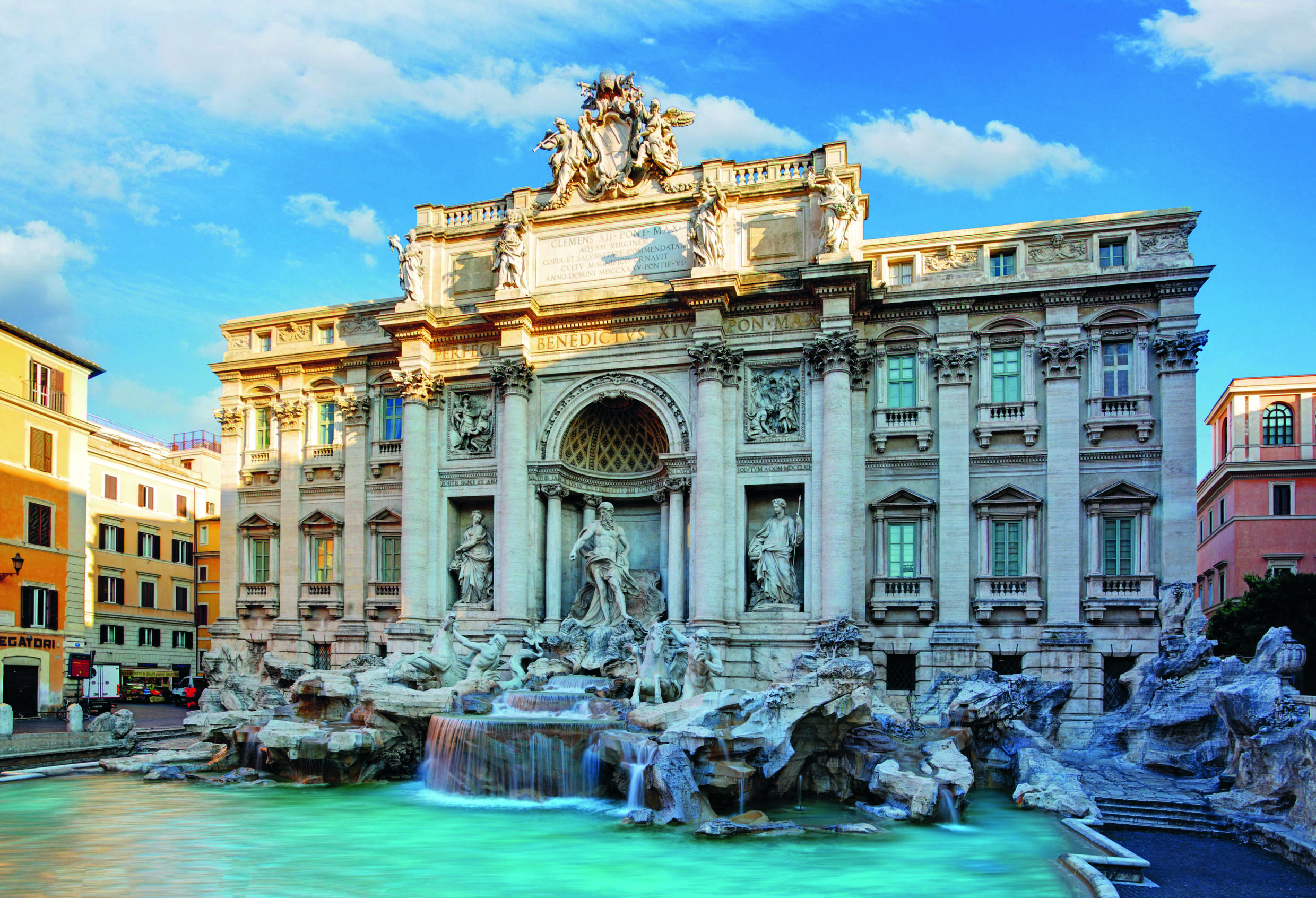
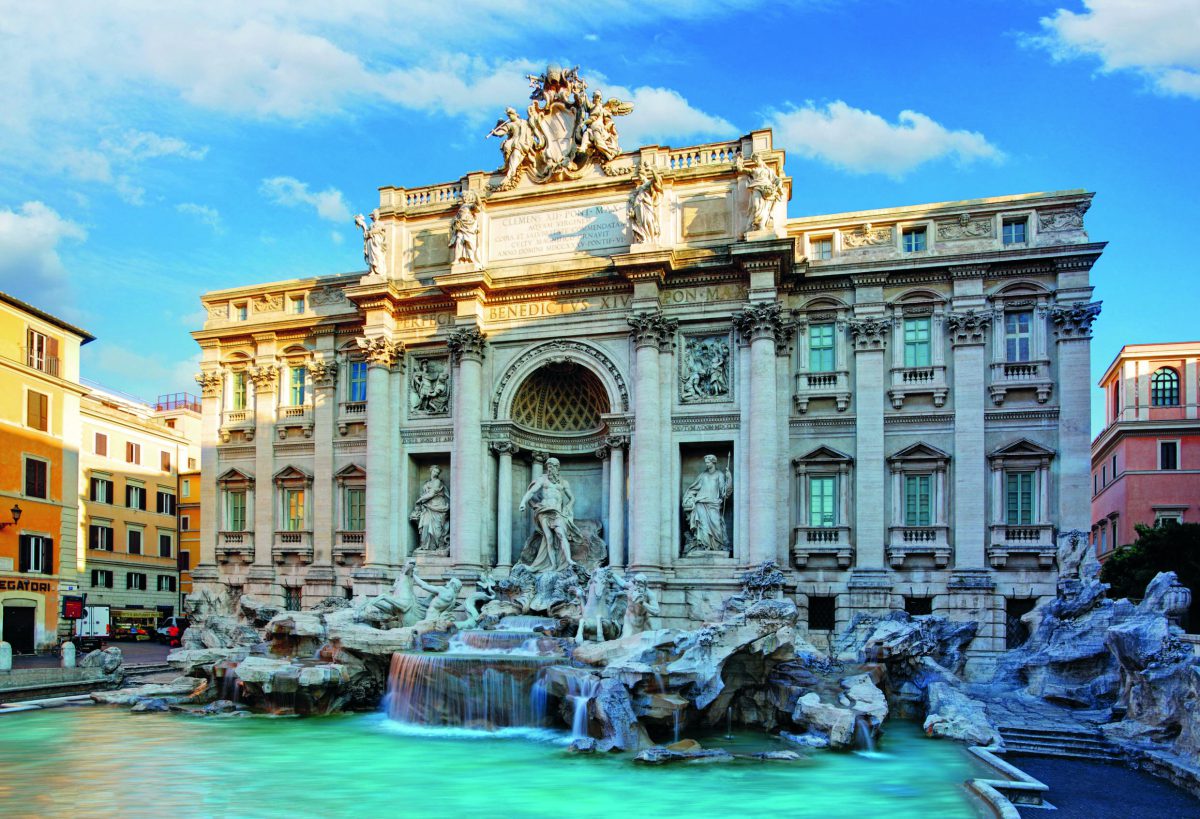
1732    Work starts on Trevi Fountain by Nicola Salvi, completed by Giuseppe Panini.
1734    Clement XII makes Palazzo Nuovo world's first public museum.
1735    Facade to La Maddalena added.
1736    Palazzo Corsini is rebuilt by Ferdinando Fugo for Cardinal Neri Corsini.
1738    Protestant Cemetery for non-Catholic burial founded in the Testaccio District.
1740    Prospero Lorenzo Lambertini becomes the 248th pope under the name Benedict XIV.
1743    Ferdinando Fuga adds main facade to Santa Maria Maggiore on orders of Benedict XIV.
1749    Coliseum dedicated to the Passion of Jesus.
1751    Piranesi's "Views of Rome" revives interest in Classical ruins.
1756    Foundation laid for Christian Museum at the Vatican Museums.
1758    Museum of Pagan Antiquities founded at the Vatican Museums.  Carlo Rezzonico
            becomes the 249th pope under the name Clement XIII.
1760    Caffe Greco opened.
1762    Trevi Fountain completed.
1768    Obelisk from Mausoleum of Augustus moved to Piazza del Quirinale.
1769    Giovanni Vincenzo Ganganelli becomes the 250th pope under the name Clement XIV.
1773    Pope Clement XIV orders suppression of the Jesuit order.  Inner courtyard of Belvedere
            Palace (now housing the Vatican Museums) designed in an octagonal shape.
1775    Gianangelo Braschi becomes the 251st pope under the name Pius VI.
1776    (to 1784) Pius VI enlarges the Vatican Museums.
1780    Tomb of the Scipios are discovered.  Michelangelo Simonetti builds the Simonetti
            Staircase at the Belvedere Palace.
1783    French Saint Benoit-Joseph Labre dies at Santa Maria dei Monti and is buried there.
1787    Observatory tower added to Palazzo del Collegio Romano.  Obelisk of Montecitorio
            erected by Pius VI.
1789    Tomb of Clement XIV built by Canova at ss. Apostoli.
1791    Fountain of the Seahorses built at Villa Borghese.
1792    Canova creates the Tomb of Clement XIII in St. Peter's.  Atrium of the Four Gates at
            the Belvedere Palace added, which was the original entrance to the Vatican Museums.
1797    Napoleon captures Rome.
1799    Napoleon expelled from Italy by Austrians and Russians.

Early 19th cent.:  statues and reliefs considered too ornate and stripped from facade of Villa
            Borghese.
            Piazza del Popolo redesigned into an exquisite oval by Giuseppe Valadier (designer
            of the Pincio Gardens).  Santa Pudenziana facade added.
1800    Barnaba Chiaramonti becomes the 252nd pope under the name Pius VII.
            (1800 to 1801)  Napoleon takes Italy again.
1803    French Academy moves into Villa Medici.
1805    Canova sculpts reclining Pauline Borghese (now in Museo Borghese).
1807    Birth of Garibaldi.
1809    Much of Villa Borghese collection sold by Prince Camillo Borghese to France and
            moved to the Louvre.
1816    Pope gives English residents and visitors right to hold Angelican services in Rome.
            Fontana di Piazza del Popolo begun, designed by Valadier.
1820    Revolts throughout Italy.  Poet John Keats moves to Rome.  Fontana del Piazza del
            Popolo completed.
1821    John Keats dies in Piazza di Spagna; buried in Protestant Cemetery.
1822    Braccio Nuovo opened at Vatican Museums.  Percy Bysshe Shelley dies and is buried
            in the Protestant Cemetery.
1823    Annibale della Genga becomes the 253rd pope under the name Leo XII.  Clock above
            the courtyard of Palazzo del Commendatore is added.
1828    First tentative excavataions of Trajan's Markets, but importance of site not recognized.
1829    Francesco Xaverio Castiglioni becomes the 254th pope under the name Pius VIII.
1831    Mauro Alberto Cappeliari becomes the 255th pope under the name Gregory XVI.  1st
            century A.D. Tomb of Columbarium of Pomponius Hylas excavated.
1836    Napoleon's mother (Letizia) dies in Rome.
1837    Etruscan Museum founded at Vatican Museums.
1842    Fontana Bocca di Leone built by Antonio Sarti.
1846    Giovanni Mastai-Ferretti becomes the 256th pope under the name Ven. Pius IX.  Division of
            days into two 12-hour periods introduced in Rome by Pius IX.
1848    Nationalist uprising in Rome.  Pope flees and a Republic is formed.
1849    Pope is restored to power, protected by a French garrison.  French attack Rome on the
            Janiculum Hill.
1857    Colonna dell'Immacolata is inaugurated in Piazza di Spagna.  Original 4th century
            church under San Clemente is rediscovered by Father Mullooly.
1860    Garibaldi and his 1,000 followers take Sicily and Naples.
1861    Vittorio Emanuele II, King of Piedmont, becomes first king of Italy.  Kingdom of Italy
            founded with capital in Turin.  San Clemente excavated; Roman ruins discovered.
1866    (to 1877) Santa Maria in Trastevere restored by Virginio Vespignani.
1870    Castel Sant'Angelo used as barracks and military prison.  Royalist troops take Rome,
            completing unification of Italy.  All vegetation is removed from the Coliseum.  The Great Flood
            of 1870 heavily damages many churches in low-lying areas.
1871    Palazzo Madama becomes home of the Italian Senate.
1874    Synagogue built along the Lungotevere.
1878    Gioacchino Vincenzo Raffaele Luigi becomes the 257th pope under the name
            Leo XIII.
1879    Via Veneto laid out on the estate sold by the Ludovisi family.
1880    All Saints built by English architect G. E. Street.
1882    Palazzo delle Esposizioni built by architect Pio Piacentini.
1883    Bernini's controversial twin turrets are removed from either side of the Pantheon.  Botanical
            Gardens changes from the Palazzo Corsini to the University of Rome.
1885    Vittorio Emanuel Monument started.
1888    Tomb of King Vittorio Emanuele II completed in the Pantheon.
1889    Etruscan Museum at Villa Giulia founded.  Museo Nazionale Romano founded.  Palazzo di
            Giustizia (Hall of Justice) begins to be built.
1890    Palazzo Margherita is completed.
1893    (to 1896) Structure below the Coliseum arena is revealed.
1895    Garibaldi Monument on the Janiculum Hill is erected.
1896    Babington's Tea Rooms opens on Piazza di Spagna.

20th cent.:  Early 1900s, Balustrade around forecourt of Villa Borghese bought by Lord
            Astor for the Cliveden estate in England.
1900    Caffe Giolitti opened.  Fontana dell'Acqua Marcia al Campidolgio built in via San
            Pietro in Carcere.  Fountain of the Nymphs is built in Piazza Esedra (Piazza della
            Repubblica).
1902    Villa Borghese and grounds collections bought by the state.
1903    Giuseppe Melchiorre Sarto becomes the 258th pope under the name St. Pius X.
1908    Barberini private collection bought by the state and housed at Villa Giulia.
1910    Palazzo di Giustizia is finished.
1911    (to 1914) Convent of Santa Caterina da Siena demolished at Trajan's Markets.
            Vittorio Emmanuel Monument completed and inaugurated.  Fontana della Galleria
            Nazionale d'Arte Modrna designed by Cesare Bazzani.
1914    Giacomo della Chiesa becomes the 259th pope under the name Benedict XV.
1915    Italy enters World War I.
1919    Castellani private collection donated to museum at Villa Giulia.
1922    Fascists march on Rome; Mussolini becomes Prime Minister.  Achille Ratti becomes
            the 260th pope under the name Pius XI.
1924    Many medieval houses demolished at Trajan's Markets site.
1926    Opposition parties are banned.
1927    Fountain of the Four Tiaras built by Pietro Lombardi at Porta Angelica.  Fontana dei
            Monti, via S. Vito built by Lombardi also, as well as a lot of minor district fountains.
1929    Lateran Treaty creates a separate Vatican state.
1930    Temple of Vesta partially reconstructed.  (1930-33) Trajan's Markets finally
            excavated.  Vatican Railway Station opens, connecting to a line from Rome to
            Viterbo (now only used for freight).  Mussolini starts building of the via della
            Conciliazione, linking St. Peter's to the rest of Rome as a gift to the Vatican.
1932    Spiral Ramp staircase is built in the Vatican Museums by Giuseppe Momo.
1939    Eugenio Pacelli becomes the 261st pope under the name Pius XII.
1940    Italy enters World War II; work begins on EUR zone.
1944    Allies liberate Rome from Germans.
1946    National referendum establishes Italy as a Republic; King Umberto II exiled.
1951    UN Food and Agriculture Building is completed.
1953    Modern Stazione Termini complex is built by Vittorio de Sica.
1957    Museo Nazionale d'Arte Orientale housed in part of Palazzo Brancaccio.  Treaty
            of Rome initiates European Common Market.
1958    Angelo Roncalli becomes the 262nd pope under the name John XXIII.
1960    Olympic Games held in Rome.
1962    Second Vatican Council brings about Church reforms.
1963    Giovanni Battista Montini becomes the 263rd pope under the name Paul VI.
1969    ss. Pudenziana and Prassede declared invalid saints but churches in their name
            remain.
1970    Paul VI opens Gregorian Museum of Pagan Antiquities at Vatican Museums.
1971    Nervi Hall (built by Pier Luigi Nervi) opens at the Vatican; seats 12,000.
1972    Pesciotti private collection bought by the state and housed at Villa Giulia.
            Michelangelo's Pieta is damaged by vandals at St. Peter's and is put behind
            bulletproof glass.
1974    Museum of Musical Instruments opens on site of part of the Imperial Villa
            (Sessorianum) of St. Helena.
1978    Premier Aldo Moro kidnapped; then killed by Red Brigades; Albino Luciani
            becomes the 264th pope under the name John Paul I.  Karol Wojtyla elected
            the 265th pope under the name John Paul II.
1979    Sistine Chapel starts restoration by Gianlugi Colalucci.
1980    Pope John Paul II proclaims a Special Jubilee Year (Holy Year).
1981    Assassination attempt on Pope John Paul II in St. Peter's Square.
1988    San Cesareo is closed to the public.
1990    World Cup held in Rome.  Three tenors Concert held at Baths of Caracalla,
            broadcast live during World Cup.
1993    Car bomb heavily damages San Giorgio in Belabro on site where Romulus and
            Remus were found with the She-Wolf.
1995    State allocates billions to restore churches, historical buildings, paintings, fountains,
            statues, and piazzas for Jubilee 2000.
1998    Restoration of the Sistine Chapel is completed after 20 years.  Restoration of "The
            Last Judgment" wall begins.

2000    John Paul II begins Holy Land Tour.  Vatican plans to canonize 120 Catholics
            killed in China between 1648-1930.  China protests the plan.
2001    John Paul II visits Umayyad Mosque in Syria.  Installs 44 new cardinals, the
            largest in history.

(NOTE:  This timetable will be added to as more current information is available.)


Back